Hey everyone, I’m [your name], a sales lead here at a RGV loop rail supplier, and I’ve spent the last 8 years working with these systems—watching them go from niche automation tools in warehouses to the backbone of modern e-commerce and manufacturing. If you’ve ever seen a fleet of driverless carts zipping along a loop rail in a fulfillment center, that’s exactly what I’m talking about. But here’s the thing: way too many folks just focus on how fast these RGVs move or how much they carry, and skip the safety part. Let me break down the non-negotiable safety measures that keep our RGV loop rail systems running smooth, no close calls, no downtime. RGV (Loop Rail)

First off, let’s get clear on what a loop rail RGV is, for anyone new here. Unlike AGVs (autonomous guided vehicles) that use lasers or magnets, RGVs run on a fixed elevated or floor-mounted rail loop. They’re predictable, super precise for heavy loads—think pallets of electronics, auto parts, even food-grade goods in temperature-controlled warehouses. But that predictability is only as good as the safety layers built into the rail and the carts themselves.
Let’s start with track infrastructure safety, because the rail is the foundation. I’ve seen so many contractors cut corners here, and it never ends well. First, load capacity. Wait, I know that sounds obvious, but let’s be real: the rail isn’t just holding the RGV. It’s holding the RGV plus its max load, plus a 150% safety factor. Why 150%? Because warehouses throw curveballs. A pallet gets stacked heavier than planned, a cart has to pull extra weight to make up for a maintenance delay, the floor shifts a tiny bit in a climate-controlled facility. If you skimp on load rating, that rail can bend, buckle, or even snap mid-operation. Last year, a client of mine in Detroit went cheap on rail steel, and a RGV carrying $20k worth of auto alternates derailed, spilled everything, and shut down their line for 3 days. No good—both for their budget and their workflow.
Then, rail alignment and wear monitoring. RGVs are precise, so even a ½-inch dip or shift in the rail can cause wheels to slip or derail. We don’t just install the rail and ghost it. Our systems include continuous track sensors that check for alignment deviations in real time. I’m talking ultrasonic sensors every 10 meters along the loop that ping the control system if something’s off. Also, wheel wear: the RGV’s drive and guide wheels rub against the rail constantly, so they wear down over time. Our safety protocol requires wheel wear sensors that alert techs when wheels hit 3mm of wear—replace them before they cause a misalignment. No more “wait until it breaks” repairs; proactive checks beat reactive fixes every time.
Next up, collision avoidance, because even with fixed rails, you have multiple RGVs moving along the same loop. Picture a 100-meter loop with 8 RGVs hauling pallets back and forth. If one cart stops suddenly, you don’t want the one behind it plowing into it. Here’s the thing: basic proximity sensors are a start, but modern RGV safety needs more. We use a combination of laser rangefinders along the rail and RFID tags on each cart. The tags tell the control system exactly where each cart is—its speed, its load, its direction. If Cart A is 2 meters ahead of Cart B and Cart B is moving too fast, the system will either slow Cart B down smoothly or trigger an emergency stop. Wait, but emergency stops aren’t one-size-fits-all. We separate “soft stops” and “hard stops” in our safety rules. Soft stops are for when a cart is just getting too close, no immediate danger—gently slow down, no jolts. Hard stops are only for when there’s a collision risk, like a person stepping onto the loop rail, and even then, we program the system to stop smoothly to prevent load damage. Speaking of people…
Perimeter and access safety is another big one, and this is where a lot of accidents happen, not with the carts, but with humans wandering into the loop zone. RGV rails are often at floor level, but sometimes elevated to save space—either way, you can’t just let anyone walk into the loop’s “safe zone” when the system’s running. Our standard setup includes physical barriers: either steel railings at waist height or low-profile chain barriers for floor-level loops. But barriers only work if they’re paired with interlocks. If a barrier gate is open (say, a worker needs to retrieve a part from the loop area), the entire loop system shuts down automatically. No exceptions. We’ve seen clients try to bypass interlocks to save time—huge red flag. Last month, a temp worker at a warehouse in Atlanta lifted a gate to grab a package, and the RGV system wouldn’t start again until the gate was secured. Saved his life, basically. We also add light curtains along the rail—infrared beams that trigger a stop if anything breaks them, even a small box or a hand. Way more sensitive than just motion sensors, especially for tight spaces.
Then there’s load and cart safety, because a RGV carrying a 1000kg pallet can be a weapon if it comes loose. First, load securing: every RGV has adjustable locking clamps that hold pallets or containers in place. We test these clamps to make sure they don’t release at full speed—even if the cart hits a small bump on the rail. Also, cart stability: center of gravity checks. If a load is top-heavy (like a stack of cardboard boxes that slip, or a roll of fabric standing up), the cart can tip over. Our systems use gyro sensors that track the cart’s tilt; if it hits a 5-degree tilt, it stops immediately. We also require load audits during installation—clients have to show us how they’re stacking their goods, not just how heavy they are. A client in Chicago once tried stacking tall, narrow pallets, and the gyro sensors caught the tilt before the cart moved. No spilled goods, no downtime.
Battery and electrical safety, because RGVs are electric, and fires or shorts are a real risk. Most modern RGVs use lithium-ion batteries, which are powerful but need proper thermal management. Our systems have battery temperature sensors that cut power if the battery gets above 50C—way below the risk point for overheating. We also use sealed electrical cabinets, so no dust or warehouse debris gets into the wiring. And here’s a pro tip: we require battery charging stations to be outside the main loop zone. No charging on the loop itself, because that exposes live power to the carts while they’re moving. I’ve heard of clients who tried in-loop charging to save space, and had a short circuit that took out 3 RGVs. Bad call.
Wait, I should also mention emergency response, because no safety system is foolproof. Every loop rail system needs multiple emergency stop (E-stop) buttons: one on each RGV, every 20 meters along the rail, and at the main control panel. But not just physical E-stops—we also have a panic alert in the control room for any worker who sees a hazard. Also, we program the system to log every safety event: when a sensor triggered a stop, when a wheel showed wear, when a gate was opened. That log is gold for troubleshooting. If a cart stopped unexpectedly, we can go back and see if it was a misaligned rail, a load tilt, or a person near the rail—no guesswork.
Now, I know some of you might be thinking, “This sounds like a lot of extra cost.” Let me be real: safety upgrades for RGV loops are way cheaper than the downtime, repairs, or legal costs of an accident. We’ve had clients who skipped safety measures initially, then spent $50k on repairs after a derailment, vs. the $10k we quote for the full safety package. It’s an investment, not an expense.
If you’re setting up a new RGV loop rail, or retrofitting an old one, don’t cut corners on these measures. At the end of the day, these systems are supposed to make your operation safer and more efficient, not the other way around.
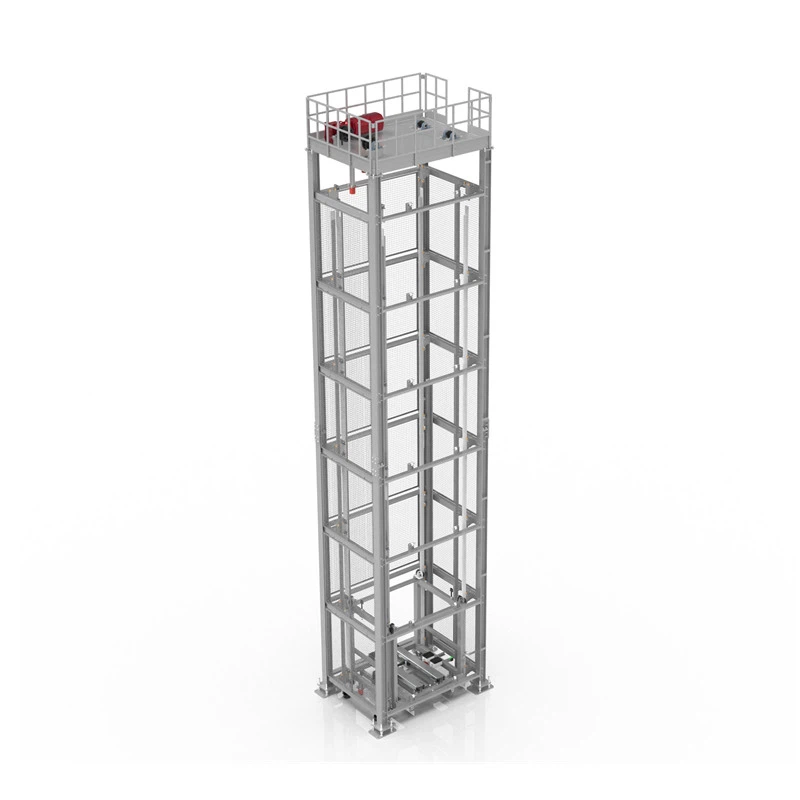
If you’re curious about how we can build a safety-focused RGV loop rail for your warehouse or facility, reach out to our team to discuss your specific needs. We don’t do one-size-fits-all, so we’ll work with you to tailor safety measures to your space, load types, and workflow.
Smart Warehousing System References
- Material Handling Industry of America. (2022). Safety Standards for Automated Guided Vehicle and Rail-Guided Vehicle Systems. MHI Publications.
- International Organization for Standardization. (2021). ISO 3691-6: Safety Requirements for Industrial Trucks – Part 6: Automated Guided Vehicles. ISO Press.
- Occupational Safety and Health Administration. (2023). Safe Operation of Automated Material Handling Systems. OSHA Technical Manual.
- Robotic Industries Association. (2022). Safety Guidelines for Mobile Robotic Systems in Industrial Environments. RIA Standards.
- Steel Manufacturers Association. (2021). Load Capacity and Alignment Specifications for Rail-Guided Material Handling Systems. SMA Technical Brief.
DELIECN
DELIECN is one of the most reliable rgv (loop rail) manufacturers and suppliers in China, our products have good reputation in the market. Please rest assured to wholesale high quality rgv (loop rail) at competitive price from our factory. Contact us for more details.
Address: Room 602, Building G2, Artificial Intelligence Industrial Park, No.88 Jinjihu Avenue, Suzhou Industrial Park, Suzhou City, China
E-mail: marketing@delilogitech.com
WebSite: https://www.deliecn.com/
