Hey folks, it’s Jake from the washer crew here—just wanted to drop a real-talk blog for anyone scrambling to pick the right washer for high-pressure applications. If you’re in oil & gas, hydraulic systems, industrial plumbing, or even heavy machinery, you know how much a wrong washer can mess things up. I’ve seen first-hand (way too many times, honestly) a cheap washer blow out mid-job, cause leaks, shut down operations, and cost way more than just getting the right part upfront. So let’s cut the jargon, break this down like I would with a guy who’s staring at a part list going “wait, what even matters here?” Washers
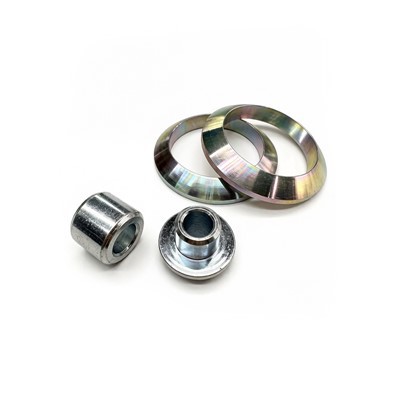
First, let’s get one thing straight: high-pressure isn’t your everyday faucet washer we’re talking about. Those little rubber discs work for low-pressure, but 1000 PSI? 5000 PSI? Even 10,000+ PSI for hydraulic presses or offshore wellheads? Regular washers can’t handle that kind of force. They’ll compress too much, deform, or just blow through the gap between two metal parts, turning a simple maintenance check into a whole mess. That’s why choosing the right one isn’t just a “pick the size” game—it’s matching the material, design, and specs to your exact pressure situation.
Let’s start with material, because that’s the foundation. I get it, it’s tempting to grab the cheapest metal washer off the shelf, but here’s the thing: not all metals play nice with high pressure. Let’s run through the main ones we stock, and when you should reach for each.
First up: stainless steel. This is the workhorse of high-pressure stuff, no cap. 304 stainless is great for most general industrial applications—hydraulic lines, pipeline flanges, even heavy-duty pumps. It’s corrosion-resistant, which is a big plus if your job’s in a damp, salty, or chemical-heavy environment (like offshore rigs or coastal manufacturing). But if you’re dealing with super high pressure—say, 15,000 PSI or more, or extreme temps (over 500°F)—you’ll want 316 stainless instead. It’s stronger, more durable, and can handle way harsher conditions. We’ve had customers use 316 washers for deep-sea subsea equipment, and they’ve never had a leak. The only downside? It’s a little pricier than 304, but trust me, paying a few extra bucks is nothing compared to fixing a leak that shuts down a rig for a day.
Then there’s copper. Wait, copper? Yeah, it’s not just for plumbing. Copper washers are soft, which means they can conform to tiny irregularities in the surface of your bolts or flanges. That makes them perfect for low-to-mid high-pressure applications (up to like 3000 PSI) where a perfect seal is key. We see copper used a lot in automotive hydraulic systems and some plumbing fixtures. The catch here is copper isn’t great for super high pressure, and it can’t handle extreme temps (over 400°F) without deforming. So it’s a solid pick, but only if your pressure and temperature are on the lower end of the high-pressure spectrum.
What about brass? Brass is a mix of copper and zinc, so it’s a step up from pure copper. It’s stronger, more corrosion-resistant, and can handle up to around 6000 PSI, plus higher temps (up to 1000°F). We use brass washers for applications like natural gas pipelines and some industrial compressors. It’s not as strong as stainless, but it’s cheaper than 316, so it’s a good middle ground if you don’t need the absolute top-tier strength.
Wait, but what if you’re dealing with something even more intense? Like ultra-high pressure (UHP) applications, over 10,000 PSI? Then you want to look at materials like Inconel or Hastelloy. These are superalloys, designed for extreme pressure, high temps, and even corrosive chemicals. We’ve supplied Inconel washers to aerospace customers for engine components and to oil & gas guys for wellhead control lines—they don’t just seal, they hold up where regular metals would fail. They’re pricey, but for UHP, there’s really no alternative if you want reliability.
Okay, material is half the battle. The other half is design. A lot of people skip over this, but the shape and type of washer make a huge difference in high-pressure situations. Let’s break down the main types we stock, and when to use each.
First, flat washers. These are the most common, right? They’re thin, flat discs with a hole in the middle. But don’t sleep on flat washers for high-pressure—they’re great for distributing the load evenly. When you tighten a bolt, if you don’t have a washer, the bolt can dig into the surface of the part, creating a tiny gap where pressure can leak out. A flat washer spreads the force of the bolt across a bigger area, so that gap closes, and the seal holds. We use flat washers for general high-pressure flange connections and bolted joints, but they’re not always enough for the really heavy stuff.
Then there’s Belleville washers, also called conical washers. These are shaped like a little cone, not flat. Why would you use those? For high-pressure applications where there’s constant vibration or temperature changes (which cause parts to expand and contract). Vibration can loosen bolts over time, leading to leaks. Belleville washers exert a constant spring force, even when the bolt tightens, so they keep the bolt in place, preventing loosening. We’ve seen customers use these on heavy machinery and hydraulic systems that run non-stop—no loose bolts, no leaks, even after months of use. They’re a game-changer for high-vibration, high-pressure jobs.
Next, sealing washers. These are specifically designed to create a tight seal against fluids or gases under pressure. There are a few types here: bonded seal washers, for example, have a metal outer ring and a rubber inner seal. They’re perfect for hydraulic systems where you need to seal oil. Another one is the rubberized metal washer, which is similar, but the rubber is molded onto the metal. We use these for plumbing and natural gas lines, where a fluid-tight seal is non-negotiable. If you’re dealing with pressurized fluids, a standard flat washer won’t cut it—you need a sealing washer that actually stops the fluid from getting out.
And don’t forget about thrust washers. Wait, when would you use a thrust washer for high pressure? Thrust washers are designed to handle axial loads (force applied along the axis of a bolt or shaft). In high-pressure applications, especially rotating ones (like in pumps or turbines), there’s a lot of axial force that can wear down parts. A thrust washer acts as a buffer, reducing friction and distributing the load. That prevents parts from wearing out too fast, which is a huge cost saver in the long run. We supply thrust washers to many industrial pump makers, and they’ve reported way less downtime for part replacements.
Now, let’s talk about specs that matter a lot—size, pressure rating, and tolerance. I know, specs can be boring, but they’re make or break. First, size: you have to get the inner diameter (ID) and outer diameter (OD) right. If the ID is too small, the washer won’t fit over the bolt, and if it’s too big, it won’t spread the load evenly. For high-pressure, it’s extra important to get the OD right—bigger OD means more area to spread the force, which is better for withstanding high pressure. Most of our washers come in standard sizes, but we also make custom sizes if you have a unique part.
Then the pressure rating. Every washer has a max pressure it can handle, usually measured in PSI (pounds per square inch) or sometimes bar. Don’t just guess this—look at the specs, and add a little buffer. If your system runs at 7000 PSI, don’t buy washers rated for 7000 PSI. Get ones rated for 8000 or 9000 PSI. Why? Because over time, pressure spikes, temperature changes, and vibration can put extra stress on the washer. Having a buffer means you won’t have a failure if something goes a little off. That’s a mistake I see all the time—cutting corners on pressure rating leads to expensive leaks.
Tolerance is another thing. Tolerance is how precise the washer’s measurements are. For high-pressure, you want a tight tolerance—meaning the ID, OD, and thickness are almost exactly what they’re supposed to be. If the tolerance is loose, the washer might not fit right, or there could be tiny gaps between the washer and the part, which leads to leaks. All of our washers have tight tolerances, so you don’t have to worry about that.
Wait, let’s talk about some common mistakes people make here, because I’ve seen them a million times. First, using a washer that’s too thin. A thin washer can’t handle high pressure—it’ll bend or compress too much, leading to leaks. If you’re dealing with 5000 PSI, you want a washer that’s thick enough to not deform. Second, mixing materials that don’t work together. Like, if you have a carbon steel bolt, don’t use a stainless steel washer that’s too dissimilar—they can corrode together, leading to a loose fit and leaks. Third, not considering temperature. A lot of people only think about pressure, but if your washer is in a 600°F environment, a copper washer will melt or deform, even if the pressure is low. Always match both pressure and temperature.
Let’s put this all together with a real example, because that’s how it makes sense. Say you’re working on a hydraulic system for a construction crane. The system runs at 4500 PSI, the temp is around 150°F, and there’s a lot of vibration from the crane moving. What do you need? Let’s see: material—304 stainless, because it’s corrosion-resistant, strong enough for 4500 PSI, and can handle 150°F. Design—Belleville washers, because of the vibration, to keep the bolts from loosening. Specs—size that fits your bolt, pressure rating of at least 6000 PSI (buffer), tight tolerance. That combination will work way better than grabbing a random washer off the hardware store shelf.
Another example: offshore oil rig flange connections. Pressure is 12,000 PSI, temp is 300°F, saltwater environment. Material—316 stainless, or even Inconel if you want extra durability. Design—flat sealing washers, to create a tight seal against crude oil and saltwater. Specs—OD big enough to spread the load, pressure rating of 15,000 PSI, corrosion-resistant coating (or use the material itself which is resistant). That’s exactly what we supply to those rigs, and our customers tell us they haven’t had to replace washers as often as with cheaper alternatives.
Now, let’s talk about when to reach out to us, instead of guessing. If you’re not sure what you need, that’s totally okay—we’ve got a team that’s been in this game for 10+ years, and we can help you pick the right washer. Whether you need a standard size for a common application, a custom design for a unique part, or a superalloy for UHP, we’ve got you covered. We don’t just sell washers—we give real advice, not the generic stuff you find on other supplier sites. We’ve had customers come to us after a leak disaster, and we’ve been able to fix their problem with the right washer, saving them thousands in downtime.
Wait, a quick note on quality. A lot of suppliers make washers overseas, cut corners on material or tolerance, sell them cheap, but they fail under pressure. All of our washers are machined in facilities that follow strict quality standards, so you know you’re getting a part that will actually hold up. We test every batch of washers for pressure resistance, so you don’t have to worry about getting a dud.
Let me wrap this up. Choosing a washer for high-pressure applications isn’t complicated, but it is important. You need to match the material to your pressure, temperature, and environment. Pick the right design for your application (flat, Belleville, sealing, thrust). Don’t skip the specs—size, pressure rating, tolerance, and add a buffer. And avoid the common mistakes: too thin, wrong material, no temperature consideration.
If you’re still not sure, or you have a specific application in mind, don’t hesitate to get in touch. We can walk you through every step, help you pick the perfect washer, and even custom-make one if you need. No pushy sales stuff, just straight talk from guys who know washers and high-pressure systems inside and out.
Wait, one last thing: if you’re looking for something for a temporary job, make sure you’re still not cutting corners. Even a temporary leak can cause a lot of damage, so it’s worth getting a reliable washer, not the cheapest one.
Washers So there you have it—no fancy jargon, just real advice for picking the right washer for high-pressure. Whether you’re a small shop mechanic, a big industrial contractor, or someone in between, this should help you make the right call. And if you need more info, just reach out—we’re here to help.
References
- Machinery’s Handbook, 31st Edition, Industrial Press Inc., 2020
- ASME B18.21.1, Compressible Force Washers, American Society of Mechanical Engineers, 2019
- Parker Hannifin Hydraulic Seal and Washer Guide, Parker Hannifin Corporation, 2022
- Materials Selection Guide for High-Pressure Industrial Components, MatWeb, 2023
Shanghai Megood Metal Products Co., Ltd.
As one of the most experienced washers manufacturers and suppliers in China, we have world-leading production equipment and strong manufacturing capabilities. Please rest assured to wholesale bulk washers made in China here and get quotation from our factory. Customized orders are welcome.
Address: Building 8, No. 1500 Huiren Road, Waigang Town, Jiading District, Shanghai
E-mail: liujingshco@163.com
WebSite: https://www.mgx-hardware.com/
