If you’ve ever found yourself craving a low-stakes, social game that blends casual fun with a touch of traditional craftsmanship, look no further than bocce ball. As a supplier of wooden bocce balls, I’ve spent countless hours at backyard barbecues, community park gatherings, and even beach days watching people fall in love with this sport—not just for its simplicity, but for the rich, natural feel of wooden balls compared to their plastic or resin counterparts. There’s something special about running your fingers over smooth, grained wood before tossing a ball, and the subtle weight difference that lets you feel every throw. If you’re new to the game or want to refine your skills with a high-quality wooden set, here’s your step-by-step guide to playing bocce ball, plus tips to make the most of your wooden bocce balls. Wooden Bocce Ball

First, let’s start with the basics. Bocce is a target-based lawn game, thought to have originated in ancient Rome (where it was played with stone balls) before evolving into the version we know today with wooden or resin sets. Unlike some sports that require months of practice, bocce is accessible to players of all ages and skill levels—perfect for breaking the ice at a family reunion or winding down after a long workweek. The core goal is simple: throw or roll your bocce balls closer to a small target ball (called a “pallino”) than the opposing team’s balls. When you use wooden bocce balls, you’ll notice they have a distinct, solid weight that grounds each throw; unlike plastic balls that can skid unpredictably on damp grass, wood’s density gives you more control, which is why so many casual and competitive players prefer wooden sets for backyard use.
To get set up, you’ll need a few key pieces—and if you’re working with our wooden bocce sets, you’ll have everything you need right out of the box. A standard bocce set includes eight bocce balls (four for each team, usually marked with numbers to tell them apart), one small pallino, and a measuring tool (often a length of string or a small wooden stick, which fits perfectly with our set’s natural aesthetic). You’ll also need a flat, open area to play—this can be a backyard lawn, a park field, or even a large driveway (just make sure the surface is clear of rocks, sticks, or debris that could throw off your ball’s path). For the best play with wooden bocce balls, aim for a space that’s at least 10 feet wide and 20 feet long; this gives you enough room to throw without crowding, and the open space lets the wooden balls’ roll path shine.
Next, split into teams. Most casual games are two teams of two players each, but you can adjust for larger groups (four players per side works too, or even individual play for a quick practice round). Each team takes four bocce balls, and the first step is to determine who goes first. The traditional way is for one player from each team to stand at the starting line (we mark this with a small stake in our sets, too, to keep things consistent) and throw a ball toward the opposite end of the playing area, as close to the center as possible. The team whose ball lands closest to the far end of the field gets to choose whether they will throw first, or “serve,” and which team’s balls they will use. For wooden bocce balls, the serve is a key throw—since it’s the first ball in play, a solid, controlled throw here can set the tone for the entire frame.
Once the serving team is chosen, the game kicks off with the pallino. A player from the serving team stands at the starting line and throws the small pallino toward the far end of the field, making sure it lands past the midpoint but not so far that it goes out of bounds. For wooden bocce ball players, the pallino’s small size lets you get precise with your throw; a gentle, overhand toss (not a hard throw) is best here, because if the pallino lands too close to the edge, it makes scoring harder for everyone. If the pallino goes out of bounds, the other team gets to place it anywhere they want along the center of the field—so aim for a spot that’s easily reachable for all players.
Now, the core action begins: throwing the bocce balls. The serving team takes turns throwing their balls, trying to get as close to the pallino as possible. Each throw is called a “roll,” and you can roll the ball along the ground, or use an underhand or sidearm motion to adjust for slopes or wind—something wooden balls handle really well, because their solid construction doesn’t bounce erratically. If a player throws a ball that lands close to the pallino, that’s a good start, but the opposing team’s turn is to throw their balls to get even closer. For wooden bocce balls, you’ll want to grip the ball firmly but not too tight; the natural wood grain gives you a nice, non-slip surface, so you don’t have to worry about your hand sliding. Many players rest their dominant hand on top of the ball, with their fingers wrapped around the bottom for control, and their non-dominant hand supporting the side. When you throw, step forward with your front foot to build momentum, and keep your follow-through smooth—this is where wooden balls shine, because their weight rewards consistent motion.
A common move in bocce is the “bocce shot,” where you throw your ball to knock an opponent’s ball that’s close to the pallino away. This is especially effective with wooden balls, because their solid density means they can displace other balls without breaking (our wooden bocce balls are sanded and sealed to withstand years of these plays). If you’re playing defensively, make sure to aim for the opponent’s ball slightly off-center, so your ball makes clean contact and pushes theirs away without veering off course. Just be careful not to hit the pallino itself—if you knock the pallino out of bounds, that frame is over, and you’ll have to reset.
Once all eight balls (four from each team) have been thrown, it’s time to score. This is where the measuring tool comes in, because two balls that look equally close might have a tiny difference that counts. The team with a ball closest to the pallino gets one point for every one of their balls that is closer to the pallino than the closest opposing ball. For example, if Team A has one ball 6 inches from the pallino, and Team B has three balls all 1 foot from the pallino, Team A gets 1 point. If Team A has two balls closer than any of Team B’s, they get 2 points, and so on. Wooden bocce balls make this scoring easy because their uniform size and shape mean there’s no variation in how you measure distance—you can simply place the measuring tool from the pallino to the closest ball, and compare. You play to 12 points, and once a team reaches 12, they win that game. If the score is 11-11, you play a “sudden death” frame, where the first team to score a point wins.
Now, let’s talk about caring for your wooden bocce balls, because that’s what makes them last for years (and perfect for every game). Unlike plastic or resin balls, wood is a natural material, so it needs a little extra care to keep it looking and playing its best. After each game, wipe your wooden bocce balls with a soft, dry cloth to remove grass, dirt, and moisture—if you leave dirt on the wood, it can scratch the finish over time. If your balls get wet (from rain or dew), dry them thoroughly and store them in a cool, dry place, not in a garage or shed where temperature fluctuations can cause the wood to warp. Every few months, you can rub a small amount of food-safe mineral oil into the wood to keep it moisturized—this prevents cracking and keeps the grain smooth, so your throws stay consistent. Our wooden bocce sets come with a care guide to make this easy, and we always recommend avoiding harsh chemicals or sandpaper, which can damage the sealed finish on our balls.
I’ve found that the best games of bocce aren’t about winning—they’re about the little moments: laughing when a ball skids into the grass, helping a kid throw their first bocce ball, or debating whether a ball is close enough to count. Wooden bocce balls add to that warmth because they feel like a piece of the game’s history, not just a disposable toy. Whether you’re hosting a small backyard gathering or looking for a new hobby that gets you outside, bocce with wooden balls is a perfect choice.
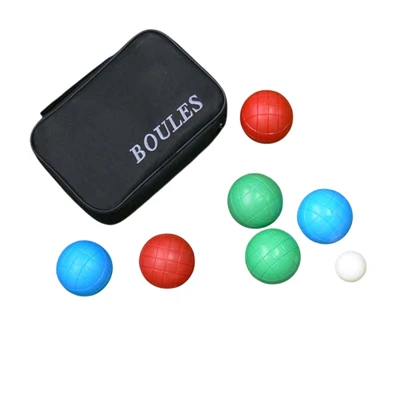
If you’re interested in trying a set of high-quality wooden bocce balls for your next game, I’d be happy to help. We craft each set with solid, sustainably sourced wood, designed for both casual play and competitive use. Contact us to learn more about our sets, customization options, or to place an order—we can’t wait to help you bring the joy of bocce to your backyard, park, or next event.
Plastic Bocce Ball References
- “History of Bocce Ball” – International Bocce Federation
- “Guidelines for Outdoor Lawn Games” – American Recreation Society
- “Wood Maintenance for Outdoor Sporting Goods” – Wood Science and Technology Journal
Hebei Honde Industrial Trade Imp. & Exp. Co., Ltd.
As one of the most experienced wooden bocce ball manufacturers and suppliers in China, we have world-leading production equipment and strong manufacturing capabilities. Please feel free to wholesale customized wooden bocce ball made in China here from our factory.
Address: Room 1904, Yintai International Building, Guang’an Street, Chang’an District, Shijiazhuang, Hebei Province
E-mail: activeballs@hbhonde.com
WebSite: https://www.hbactiveballs.com/
