If you’ve ever browsed agricultural supply stores or small-scale renewable energy forums, you’ve probably seen a compact, boxy machine tucked in a corner: a small biomass pellet machine. As a supplier who’s answered hundreds of questions from small farmers, home energy users, and hobbyist woodworkers over the past 12 years, one of the most common questions I hear is, “What is the real production capacity of a small machine like this?” It’s easy to find vague claims online—some sellers advertise 500kg per hour for a machine that’s no bigger than a washing machine— but the truth is, capacity isn’t a one-size-fits-all number. It depends on a dozen factors, and I’ve spent years testing these machines to separate marketing hype from real-world performance, so I can break it down straight. Biomass Pellet Machine
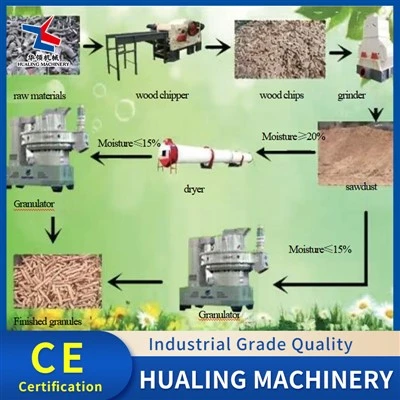
First, let’s define what a “small biomass pellet machine” actually is, because that term gets stretched thin. In our industry, small machines are generally those with a die diameter under 300mm, designed for home use, small farms, or local small-scale operations. They weigh between 200kg and 800kg, run on 220V single-phase electricity (no three-phase industrial hookups needed), and are meant to process 50kg to 500kg of pellets per hour, but that’s a broad range. Let’s start with the baseline: the theoretical maximum capacity, then the real-world numbers that matter for actual buyers.
When a machine is brand new, set up perfectly, and running with ideal raw material, the theoretical capacity is a useful benchmark, but it’s almost never what you’ll get day-to-day. For a small machine with a 150mm die (the most common size for home users), theoretical max is around 80kg per hour. For a 200mm die, that jumps to 150kg, and a 250mm die hits 250kg. A 300mm small machine tops out around 400kg per hour theoretically. But here’s the catch: that number assumes you’re feeding perfectly dried, uniform raw material every time, with no downtime for maintenance, no jams, and the machine is operating at 100% motor load 24/7. That’s not how anyone uses a small machine. Most small operators run theirs 1–4 hours a day, not 24/7, and they deal with variable input materials that throw off capacity.
The biggest factor that changes actual capacity is the raw material you’re processing. Let’s be honest: most small buyers don’t have access to perfectly processed wood chips dried to exactly 10–12% moisture content, which is the sweet spot for pellet making. I’ve had customers run their machines with fresh tree trimmings that are 30% moisture, and those same machines can barely push 30kg per hour. Dry, sawdust from a furniture shop (kiln-dried to 10%)? That same machine hits 90kg per hour. Why the difference? Moisture too high makes the material too soft to compress into dense pellets, so it slips through the die, not through the rollers, reducing output. Moisture too low makes the material brittle, so it clogs the die, and you have to stop every 10 minutes to clear it. I always tell new buyers to test their raw material first: a simple moisture meter ($20 from a hardware store) will tell you if you need to dry it in the sun for a day or mist it with a little water to hit that 10–12% sweet spot. Change that, and you can double your capacity overnight—no machine upgrade needed.
Next, the type of raw material matters, too. Softwood sawdust (pine, spruce) is easier to compress, so it delivers higher capacity than hardwood (oak, maple), which is denser and harder to push through the die. Straw and hay are even trickier: they’re fibrous, so they tend to wrap around the machine’s rollers, causing jams that stop production. We’ve designed a few small machines with anti-wrap blades specifically for straw, and even with that, capacity drops 20–30% compared to sawdust. Agricultural residues like corn stover and sunflower stalks? They’re manageable if you grind them into uniform particles (1–5mm) before feeding, but if you feed whole stalks, you’ll be lucky to get 50kg per hour. I’ve seen customers skip the grinding step because they thought it was extra work, and end up with a machine that only runs at 40% of its potential capacity.
Then there’s motor power, which is tied directly to capacity. A lot of small machines use 5.5kW motors, but some cheaper models on the market use only 3kW to cut costs. I once had a customer buy a 3kW machine advertised as “100kg per hour,” and he couldn’t get it to hit 50kg, even with perfect sawdust. The 3kW motor doesn’t have enough torque to push dense sawdust through the die consistently. We use 5.5kW motors for our 150mm die machines, which gives them consistent capacity of 70–80kg per hour, not the 100kg the cheaper models claim. For 200mm die machines, we use 7.5kW motors, so their real-world capacity is 130–150kg per hour, not the 200kg some sellers brag about. Oversizing a motor adds cost, but it’s worth it for small operators who don’t want to deal with overloaded machines that break down after a few months.
Maintenance is another big one that most buyers overlook. A new machine runs smoothly, but after a few months of use, the die holes wear out, the rollers lose tension, and the bearings get dirty. If you don’t tighten the rollers every 100 hours of use, they won’t compress the material enough, and capacity drops by 15–20%. If you don’t clean the die every 50 hours, sawdust residue builds up in the holes, clogging them, and you have to stop every 15 minutes to clear it. I had a farmer who ran his machine for a year without cleaning the die, and his capacity went from 120kg per hour to 60kg—he thought the machine was broken, until we showed him the clogged die. We include a full maintenance guide with every machine we sell, and we offer free monthly check-ins for the first six months, because small operators don’t have the time or expertise to troubleshoot wear and tear on their own.
Now, let’s talk about what this means for different users, because capacity depends on what you’re going to use the pellets for. If you’re a home user who heats your house with a pellet stove, you’ll need about 1–2 tons of pellets per heating season (that’s 1000–2000kg). A small machine with 70kg per hour capacity, running 2 hours a day, 6 days a week during harvest season (when you have time to process material), will get you that 1000kg in about 16 hours of total run time. That’s totally manageable. If you’re a small farm selling pellets to 5–10 local neighbors, you might need 5–10 tons per season. A 150kg per hour machine, running 4 hours a day, will get you that 5000kg in 33 hours of run time. If you’re a hobbyist who just wants to turn tree trimmings into pellets for your pet’s enclosure or a small grill, a 50kg per hour machine is more than enough—you don’t need to chase the highest capacity, because you only process a few hundred kilograms a year.
I always warn buyers to be skeptical of any capacity number that doesn’t specify conditions. If a seller says “our small machine does 500kg per hour,” ask them what die size, what motor power, what raw material, and what moisture content they tested it at. 500kg per hour is only possible with a 300mm die, a 15kW motor, and perfectly dried sawdust— that’s not a small machine, that’s a mid-sized model. Some sellers downsize their motors to cut costs, advertise the theoretical max, and call it a “small machine,” which sets buyers up for disappointment.
We’ve tested our machines in our workshop for years, and we’ve also sent them out to real users in different climates and with different raw materials to get real data. For example, our 150mm small biomass pellet machine, which is the most popular model for home users, consistently hits 70–85kg per hour when run with kiln-dried sawdust (10–12% moisture). If you run it with pine sawdust from a local lumber mill, that number stays around 75kg, but if you run it with straw that’s been ground and dried, it drops to 55–60kg. That’s the real number, not the 100kg some competitors claim. We post this data on our product pages, because we don’t want customers to buy a machine expecting 100kg, then get upset when they only get 70.
Another common mistake buyers make: thinking higher capacity is always better. A machine with 150kg per hour is great for a small farm, but if you’re a home user, you’re wasting money on extra motor power and extra machine size. A 150kg machine is bigger, heavier, and more expensive than a 70kg machine, and it uses more electricity. If you only need 1 ton of pellets a year, the smaller machine is more cost-effective, even if it has lower capacity. It runs quieter, takes up less space, and uses less power, which is important for home users who don’t want to install a separate electrical line.
There’s also the question of downtime. Small machines are not industrial units, and they don’t run 24/7. You have to stop to feed material, clean the machine, and deal with jams. I always add a 20% downtime factor when calculating real capacity. So a machine with a 100kg per hour theoretical max has a real net capacity of 80kg per hour, after accounting for stops. That’s why a lot of sellers’ advertised “hourly capacity” is the gross number, not the net, so it’s misleading.
If you’re thinking about buying a small biomass pellet machine, don’t just look for the highest capacity. Think about your needs: how many kilograms of pellets do you need per year? What raw material do you have access to? Do you have the space to store a bigger machine? Do you have the time to do maintenance? A machine that’s too big for your needs will sit in your garage half the time, wasting money, while a machine that’s too small will mean you have to process material for weeks to get the pellets you need.
At the end of the day, there’s no magic number for small biomass pellet machine capacity. It’s a range that depends on the machine’s components, your raw material, your maintenance habits, and how you use the machine. If you’re still not sure what size is right for you, don’t guess. Reach out to our team to discuss your specific needs. We’ve worked with hundreds of small-scale operators, and we can help you pick a machine that will deliver consistent, real-world capacity, not marketing hype. Whether you’re a home user looking to cut heating costs, a small farm diversifying your income, or a hobbyist turning waste into useful fuel, we can find the right fit for you. We can also share test data from machines in similar situations, so you know exactly what to expect before you buy. Don’t settle for vague claims—get the facts from someone who’s been in the industry for years, testing these machines every day. Let us help you make a decision that works for your needs, not just the largest advertised capacity.
Wood Hammer Mill References
Biomass Pellet Production: Small-Scale Systems for Rural Applications. Food and Agriculture Organization of the United Nations, 2021.
Small Scale Biomass Pellet Mills: Performance Metrics and Best Practices. International Energy Agency Bioenergy Task 43, 2022.
Moisture Content Effects on Pellet Quality and Production Rate. Journal of Cleaner Production, vol. 278, 2020.
Shandong Hualing Machine Manufacturing Co., Ltd.
As one of the most professional biomass pellet machine manufacturers and suppliers in China, we also support customized service with low price. Please rest assured to buy discount biomass pellet machine in stock here from our factory. If you have any enquiry about quotation, please feel free to email us.
Address: Industrial Park, Dagong Village, Changshan Town, Zouping City, Shandong Province
E-mail: hualing@sdhualing.com
WebSite: https://www.hualingmachine.com/
