If you’re a metal parts hot dip galvanizing equipment operator, you already know hot dip tanks are the heart of your line. Without consistent, proactive maintenance, even the sturdiest tank—engineered to hold molten zinc at 450°C (842°F) for hours at a time—can degrade faster, leading to costly downtime, uneven galvanizing coatings, or even safety hazards. As a hot dip galvanizing equipment supplier with over a decade of working with job shops, fabricators, and large-scale production facilities across North America, we’ve seen firsthand how a misaligned maintenance schedule can turn a profitable quarter into a string of unplanned shutdowns. Today, I’m breaking down a science-backed, practical maintenance schedule tailored specifically for hot dip tanks, designed to keep your line running smoothly while extending the lifespan of your most critical asset. Metal Parts Hot Dip Galvanizing Equipment
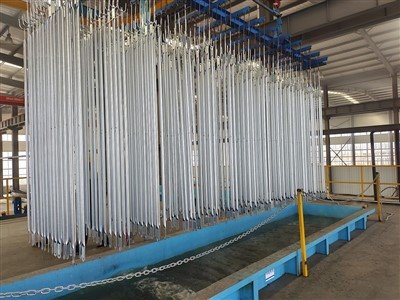
First, let’s start with why hot dip tank maintenance isn’t a one-size-fits-all task. Tanks don’t operate in a vacuum: factors like tank material (carbon steel, low-alloy steel, or cast iron), zinc batch purity, production volume, and even the temperature fluctuations during your work cycle all impact wear and tear. For example, a tank running 24/7 for automotive part galvanizing will experience far more thermal stress than a smaller tank used for general hardware production, so its maintenance needs will shift accordingly. Our team works with clients to adjust schedules based on their unique operations, but the core framework below applies to 90% of hot dip galvanizing setups we support.
Let’s structure the schedule into three tiers: daily checks (non-negotiable, 15 minutes before shift start), weekly preventive tasks (1–2 hours of work, ideally during a scheduled downtime window), and quarterly/annual deep maintenance (4–8 hours, planned well in advance to avoid production gaps). We’ll also cover the less frequent, but equally important, long-term inspections that happen every 1–2 years.
Starting with daily pre-shift checks. These might seem small, but skipping them is the number one reason clients face unexpected issues early in the production run. First, verify the molten zinc level: it should sit 10–15 cm above the top of the work baskets or any internal baffles. Too low, and the top of the tank’s sidewalls can get exposed to ambient air, leading to zinc adhesion on the tank wall and accelerated corrosion over time. Too high, and zinc can slop over during part immersion, creating slip hazards and wasting material. Next, inspect the fluxer system’s drainage line—flux residue that builds up in the drain can back up into the tank, introducing impurities that cause rough, defective coatings. We recommend checking this drain for clogs daily, especially if you use acid flux (common for high-volume steel parts). Finally, a quick scan for hot spots on the tank’s exterior using an infrared thermometer: hot spots can indicate a failing heating element or a thinning wall, which needs immediate attention before it leads to a leak. Last year, a client of ours skipped this daily check and ended up with a 2 cm hole in their tank’s side after a heating element failed—costing them $12,000 in repairs and 3 days of downtime. That’s exactly why these 15-minute checks matter.
Moving to weekly preventive maintenance, which digs a little deeper into areas that daily checks can’t cover. First, we want to remove zinc dross from the tank’s surface. Dross is a mixture of zinc oxide and iron-zinc alloys that forms as the molten zinc reacts with oxygen in the air. Leaving dross on the surface not only wastes zinc (up to 5% of your monthly zinc consumption, per industry data) but also can stick to parts being galvanized, creating surface defects that lead to rejected orders. For high-production tanks (over 10 tons of parts per week), we recommend skimming dross 2–3 times a week; for smaller operations, once a week is enough. Pro tip: use a dross skimmer designed to minimize zinc loss—our team supplies lightweight, non-stick skimmers that cut waste by 15% compared to standard models. Next, inspect the tank’s heating elements (if you use electric heating) or the burner lines (for gas-fired tanks). For electric elements, check for loose connections or signs of corrosion at the base where they enter the tank—thermal expansion and contraction can loosen fittings over time. For gas burners, clear any soot buildup in the burner heads, as blocked burners reduce heating efficiency by up to 20%, forcing you to run longer cycles and increasing energy costs. Finally, test the tank’s temperature control system: use a calibrated thermocouple to verify that the molten zinc stays within 445–455°C, the optimal range for hot dip galvanizing. Temperatures higher than 460°C accelerate tank wall corrosion by 3x, per research from the American Galvanizers Association, so this weekly check prevents unnecessary wear.
Now, the quarterly and annual deep maintenance tasks, which are critical for catching issues before they become catastrophic. Let’s start with quarterly tasks. First, perform a wall thickness measurement on the tank. Over time, molten zinc reacts with the steel walls to form a thin iron-zinc layer, which gradually eats away at the base material. Using ultrasonic thickness gauges (affordable for small operations, or something our team can perform during a service visit), measure the wall thickness at 5–10 points around the tank, including the corners and bottom, where wear is highest. If the thickness drops below 70% of the original manufacturer’s specification, you’ll need to plan for repairs or lining upgrades to avoid leaks. Next, inspect the tank’s drain valve: zinc residue can harden in the valve seat, leading to leaks when you drain the tank for maintenance or top-ups. Disassemble the valve, clean all residue, and replace any worn gaskets—we recommend using high-temperature gaskets rated for 500°C to ensure longevity. For clients with internal baffles or immersion tubes, check for buildup: zinc that solidifies on these components can alter the part immersion depth, leading to uneven coatings. Use a chisel or wire brush to remove buildup, being careful not to scratch the baffle surface, which can create crevices for dross to accumulate.
Annual deep maintenance goes a step further, requiring a full tank drain (plan this during a slow production period, like a holiday break) to inspect internal components. First, while the tank is completely drained, check for pitting or corrosion on the inner walls: small pits are normal, but large, deep pits (over 1 cm in diameter) are a sign that the tank is nearing the end of its lifespan. If you spot these, our team can recommend weld repair, or if the pit depth is too high, a new tank lining. Next, inspect all internal fixtures: immersion baskets, support beams, and thermocouple wells. Support beams often take the most stress from repeated loading and unloading of parts, so check for cracks or bent sections. Thermocouple wells, which measure zinc temperature, can get clogged with zinc residue, leading to inaccurate readings—clean them with a wire brush or replace them if they’re corroded. Finally, after cleaning the tank, apply a zinc-rich primer to the external walls (if your tank isn’t already coated) to prevent atmospheric corrosion, especially if your facility is in a humid or coastal area. This simple step can extend the tank’s external lifespan by 5–7 years.
For tanks operating in extreme conditions—like 24/7 production, or facilities that process heavy-gauge steel parts—we recommend adding semi-annual checks between the daily and weekly tasks. These focus on monitoring thermal stress: check for warping in the tank’s top rim, which happens when temperature fluctuations cause uneven expansion. A warped rim can make it hard to align work baskets, leading to parts not fully submerged. If you notice warping, our team can help you reinforce the rim with steel plates or adjust your heating cycle to reduce temperature swings.
Now, let’s address common mistakes we see operators make that shorten tank lifespan. One big one is using recycled zinc batches without testing their purity. If your zinc has more than 1% iron content, it will form excess dross and accelerate tank wall corrosion. We always recommend testing new zinc batches before adding them to the tank, and for clients using recycled zinc, adding 100% pure zinc to dilute impurities every 2 months. Another mistake is ignoring safety during maintenance: when draining the tank, make sure the zinc is cool enough (below 100°C) before working near it, and use personal protective equipment (heat-resistant gloves, face shields, steel-toe boots) to avoid burns.
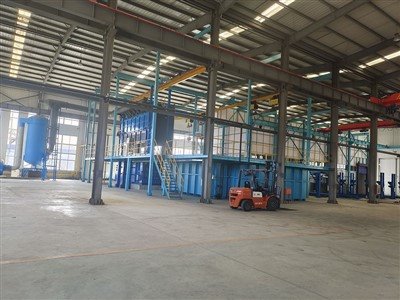
At the end of the day, a well-maintained hot dip tank is an investment that pays for itself. We’ve had clients who followed this schedule extend their tank’s lifespan from 12 years to 18 years, and reduce unplanned downtime by 75% compared to peers who skipped maintenance checks. If you’re looking to refine your current maintenance routine, or need support with ultrasonic wall thickness testing, dross skimming equipment, or tank repair, reach out to our team to discuss tailored solutions for your operation. We’re here to help you keep your galvanizing line running efficiently, safely, and profitably.
Metal Parts Hot Dip Galvanizing Equipment References
American Galvanizers Association. (2021). Hot Dip Galvanizing Equipment Maintenance Guidelines. AGA Technical Report.
Galvanizers Association of Australia. (2019). Maintenance Best Practices for Hot Dip Zinc Tanks. GAA Industry Manual.
International Lead Zinc Research Organization. (2020). Corrosion Rates of Steel in Molten Zinc Environments. ILZRO Research Bulletin.
Jinzhou Hongri Galvanizing Equipment Co., Ltd.
As one of the most professional metal parts hot dip galvanizing equipment manufacturers and suppliers in China, we’re featured by quality products and good price. Please rest assured to buy durable metal parts hot dip galvanizing equipment for sale here from our factory. We also accept customized orders.
Address: Yingpan Industrial Park, Taihe District, Jinzhou City. Address: No. 90, Gongwei Street.
E-mail: rsea.jz@163.com
WebSite: https://www.hrgalvanize.com/
