If you’ve ever worked with custom stamped parts, you’ve probably wondered about one key number that matters more than you might think: coefficient of friction (CoF). I’m Jake, one of the guys who runs the custom stamping shop, and I get questions about CoF almost every day from engineers, product designers, and small-batch manufacturers. A lot of folks assume it’s a fixed value, like the part’s thickness or its material grade—but that’s not even close. Let’s break this down simply, no engineering jargon overload, and explain why it’s make or break for your custom stamped components. Custom Stamped Parts
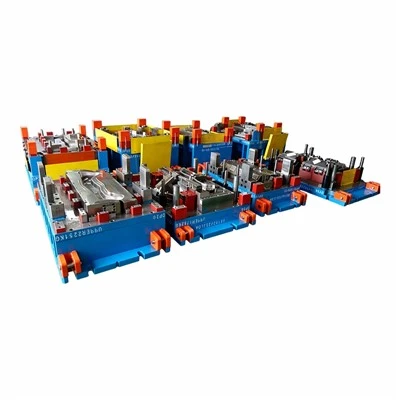
First, let’s define what CoF actually is, in plain terms. It’s just a measure of how much two surfaces slide against each other. If one surface is super slippery, CoF is low; if they grip tight, CoF is high. For custom stamped parts, this number isn’t pulled out of a textbook. It depends on way more than the base metal you start with, and that’s where a lot of buyers get tripped up.
Let’s start with the basics: what we use to make your custom stamped parts is almost always metal—steel, aluminum, brass, even stainless steel. But even the same metal type can have totally different CoF depending on how we stamp it. For example, a cold-rolled steel sheet that’s stamped with light tool pressure might have a rougher surface texture than one stamped with tighter dies. Rougher surfaces tend to catch more, so their CoF is higher. We always adjust our stamping pressure, die finish, and even lubrication during the process to tweak that. Last quarter, we had a customer making small brackets for a lawnmower who originally sent a part stamped with a too-smooth surface—their bracket kept sliding in the assembly, so they came back to us, we adjusted the stamping die’s finish, bumped the CoF just enough, and the problem was gone. No new material, no redesign, just a tweak to the stamping process.
Then there’s post-stamping treatments. A lot of people don’t realize that what we do after stamping can change CoF way more than the base metal. If you’re making parts that go into a device that needs low friction, like a sliding tray or a gear, we might add a coating—like zinc plating, or even a Teflon dry lube. Zinc plating is common for corrosion protection, but it can lower CoF by 20-30% depending on the thickness. We did a run for a medical device maker last year; their original parts were raw aluminum, but the sliding mechanism kept sticking, so we added a thin Teflon coating right after stamping, and their CoF dropped from 0.6 to 0.2—perfect for their needs. On the flip side, if you need high friction parts, like brake pads or grip brackets, we might skip coatings, or even bead-blast the stamped part’s surface to make it rougher, boosting CoF. We had a construction equipment customer who needed brackets that wouldn’t shift on a metal frame, so we bead-blasted the brackets after stamping, and their CoF went from 0.4 to 0.7—just right for their heavy-duty use.
Wait, also think about what the custom stamped part is going to touch. CoF is never a standalone number; it’s always between your stamped part and another surface. A part that slides against plastic will have a different CoF than the same part sliding against another metal. That’s a mistake a lot of first-time buyers make—they pick a CoF number based on their part alone, not what it’s interacting with. For example, if your stamped part goes against a rubber seal, you need a higher CoF to keep it from moving, but if it slides against a polished aluminum tube, you want lower CoF to avoid wear. We always ask that question early on: “What surface is your part going to contact?” because it changes everything.
Another big factor: wear and tear. CoF isn’t static over the life of the part. If your stamped part is moving a lot, repeated sliding can wear down the surface, which changes CoF. We’ve seen parts start with a CoF of 0.5, but after 10,000 cycles, that drops to 0.3 because the top layer of the stamping wore away. That’s why we help customers test for their specific use case—we can run a prototype part, test its CoF after a set number of cycles, and adjust the stamping or coating process to make sure it holds up. For our automotive clients, that’s non-negotiable; their parts have to last 100k+ miles, so we test CoF at 0, 50k, and 100k cycles to make sure it stays consistent.
Now, let’s talk about myths we hear all the time. First myth: “All steel stamped parts have the same CoF.” Nope. We’ve had two different runs of 1018 steel parts—one stamped with a polished die, one with a rough die—coming out with CoF numbers 0.3 and 0.6, respectively. Same material, totally different process, big difference in CoF. Second myth: “CoF is a single value from the manufacturer.” We don’t just send a sticker with a CoF number. We give a range, and we test it for your specific part. Because if you get a number from a random metal supplier, that’s for a raw sheet, not a stamped part that’s been through our presses. That’s a critical distinction—raw sheet CoF isn’t the same as your finished custom stamped part.
So, how do we tailor CoF to your needs? It starts with a quick chat, right? When you reach out to us with your custom stamping project, we’ll ask three key questions: 1) What’s the part’s function? (Sliding? Gripping? Sealing?) 2) What surfaces will it contact? (Metal? Plastic? Rubber?) 3) What’s the life expectancy of the part? (Short-term prototype vs. long-term industrial part.) Then, we’ll build the stamping process to hit your target CoF. For example, if you need a high-friction part for a pallet lock, we’ll stamp it with a rough die, maybe skip a smooth coating. If you need a low-friction part for a laptop hinge, we’ll add a dry lube coating, polish the stamping die to reduce surface roughness.
Last month, we had a customer who was making custom stamped clips for a gym equipment assembly. They originally ordered a run of raw steel clips, but when they tested them, the CoF was too low—so the clips would slip off the bar they attached to. They thought they needed to redesign the part, but we suggested a simple fix: we adjusted the stamping die’s corner radius, which made the clip’s inner surface slightly rougher, and bumped the CoF up just enough (from 0.3 to 0.5) to keep the clip secure. No new design, no extra cost beyond adjusting the die, and they got their parts in 3 days. That’s the kind of thing we do every day—solve CoF problems without making you go back to the drawing board.
If you’re working on a project where CoF matters—whether it’s for consumer electronics, medical devices, construction equipment, or any other custom stamped part—don’t leave it to guesswork. A CoF that’s off can lead to parts failing, assemblies not working, or even big costs down the line. We’re the guys who know the ins and outs of stamping, coating, and adjusting every variable that affects CoF. Whether you need a prototype run, a small batch, or a full production run, we can test your prototype, tweak the process, and make sure your parts hit the exact CoF (and every other spec) you need.
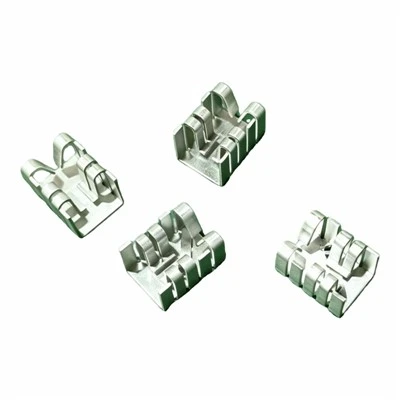
Reach out to us to talk through your custom stamped part project, get a quick breakdown of what we can do for your CoF requirements, and get a fast quote. No complicated forms, no sales jargon, just a team that’s worked with hundreds of customers to get their parts right.
Metal Stamping Dies References
- ASTM International. Standard Test Method for Static and Kinetic Coefficients of Friction of Plastic Film and Sheeting. ASTM D1894, 2022.
- Bhushan, B. Introduction to Tribology. 2nd ed., John Wiley & Sons, 2013.
- Metal Stamping Association. Guidelines for Finishing and Surface Treatments of Stamped Metal Components. 2021.
- Zhang, L., et al. “Effect of Stamping Process Parameters on Surface Roughness and Coefficient of Friction of Cold-Rolled Steel Parts.” Journal of Manufacturing Processes, vol. 45, 2019, pp. 567-575.
- Automotive Industry Action Group. Coefficient of Friction Testing for Automotive Stamped Components. AIAG B11, 2020.
Dongguan Changdong Tool & Die Co., Ltd.
With abundant experience, we are one of the most reliable custom stamped parts manufacturers and suppliers in China. Please feel free to buy advanced custom stamped parts made in China here from our factory. Good service and quality products are available.
Address: No. 56-B, Fumin South Road, Dalang Town, Dongguan City, Guangdong Province, China
E-mail: sales@stamping-die.com
WebSite: https://www.metalstampingdie.com/
