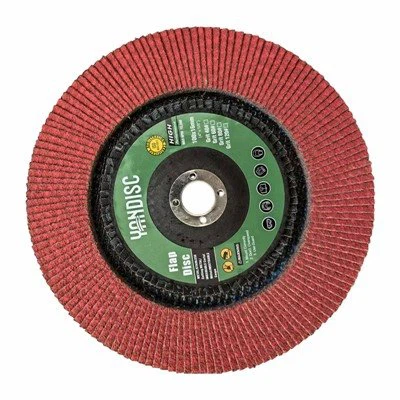
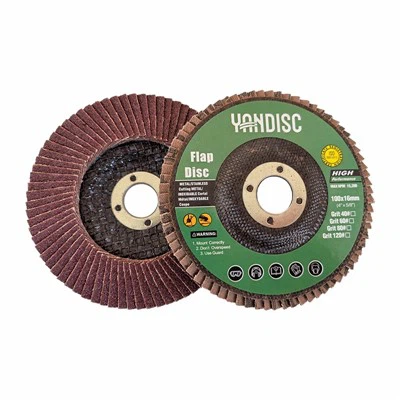
Hey there, if you’re anything like me, you’ve probably stared at a pile of DIY projects in your garage or basement at some point—chipped ceramic mugs you want to refinish, metal patio furniture that’s rusted, maybe even a weird little shelf frame you welded in college that’s seen way better days. Last year, I had a friend who asked me straight up: “Are ceramic flap discs even worth it for home use? I don’t run a workshop, I just need something to get small jobs done around the house.” That question stuck with me, so I’m breaking this down from both a supplier’s perspective and what I’ve seen with actual home users over the last decade (no stuffy industry jargon, promise). First, let’s get the basics out of the way real quick: what even is a ceramic flap disc? It’s that round, wheel-like tool you clamp to an angle grinder—think of it as a stack of tiny, overlapping abrasive “flaps” that spin super fast when the grinder is on. Regular abrasives are like aluminum oxide, right? Those are the ones you’ve probably used for basic sanding or grinding before. Ceramic is different: the grains are way sharper, and when they dull a little mid-use, they self-sharpen instead of glazing over. That’s a huge difference no home user should sleep on. Now, the big question: is it for you, if you’re not a professional contractor or metal fabricator? Let’s start with the wins, because that’s where most home users are gonna lean in. First off, it’s way more efficient than the aluminum oxide discs most people grab at the local hardware store. I had a customer last month, a guy who fixes up old vintage bikes as a side hobby—he used to burn through 3 aluminum oxide discs refinishing a single bike frame, getting rust off and smoothing welds. Now he uses ceramic, and he’s getting the same work done with one. That math adds up for anyone who doesn’t wanna run to the store every time they start a project. But wait, efficiency isn’t just about time—it’s about the mess and the finish. Ceramic flaps don’t clog as easily. If you’ve ever used a regular disc on wood, especially soft stuff like pine or cedar, you know how fast those grains get gummed up with sawdust, leaving scratch marks instead of a smooth surface. Same with metal: if you’re grinding rust or welds, aluminum oxide discs will load up with metal shavings in seconds, so you’re constantly pressing harder just to make them work. Ceramic grains are harder, so they shed that shavings way better. I saw a mom last year who was refinishing her daughter’s outdoor play table—she’d tried 2 different regular discs before switching to ceramic, and she texted me a photo a week later, the table was smooth enough that her kid could run her hands over it without catching. That’s not just a “pro thing” finish, that’s a home use win. Then there’s durability. A lot of home users don’t realize angle grinders for DIY are often used intermittently—you’ll use it for 10 minutes to cut a bolt, then put it back in the garage for 3 months. Regular abrasive discs will go dull sitting on a shelf too, not just when you’re using them. Ceramic discs hold their sharpness way longer, even if they’re not used constantly. I’ve had a guy who uses his angle grinder once a year to cut down old tree stumps in his backyard tell me he’s had the same ceramic disc for 2 years, still works fine. Compare that to a regular disc he used to use that would crumble if he didn’t use it within 6 months. That’s a big cost saver for home users, who usually don’t buy discs in bulk like a pro shop would. But hold on—this isn’t a one-size-fits-all tool. I can’t tell you to run out and buy a 4-inch ceramic flap disc for your first project ever without talking about the downsides, because not every home job is a good fit. First off, cost. If you’re grabbing a $2 aluminum oxide disc for a tiny 15-minute job, a ceramic disc is gonna run you $8 to $12. That’s a big jump upfront. For a job where you just need to smooth a small rust spot on a lawnmower blade, that’s probably overkill. I always tell new home users: if it’s a quick, one-off small job, stick with the regular disc. But if you’ve got a project that’s gonna take more than 30 minutes, or you know you’ll be doing similar projects regularly, the ceramic one pays for itself fast. Another downside: it’s more aggressive. That sharp self-sharpening grain means it takes off way more material faster than a regular disc. That’s great for grinding welds or removing thick rust, but bad if you’re doing a delicate job—like refinishing a thin metal decorative sign, or sanding down a small wooden craft piece. I had a customer try a ceramic disc on a small metal birdhouse he was painting for his wife, and he sanded way too much off the edges, ruining the detail. So for super delicate, small wood or thin metal jobs, you might wanna stick to a finer aluminum oxide flap disc, not the heavy-duty ceramic. Also, you’ve gotta match it to your angle grinder. Wait, not all angle grinders are made equal. A lot of home users have those cheap 4-amp angle grinders they picked up at a big box store for $20. Ceramic discs spin at a similar speed to regular ones, but they’re denser, so they put a little more strain on the grinder. If your grinder is under 5 amps, you might notice it bogging down a little when you push hard on the disc, especially on thick metal. I always recommend checking your grinder’s specs—if it’s 5 amps or higher, you’re good. If it’s smaller, maybe test with a cheap ceramic disc first, or stick to regular for those heavier jobs. Another thing people don’t talk about: safety. Ceramic discs are just as safe as regular ones, but because they’re more aggressive, you gotta be a little more careful. Don’t press super hard—let the disc do the work. I’ve seen a few home users over the years press down so hard with a ceramic disc that it jumped, scratched a wall, or even nicked their hand a little. It’s not dangerous if you use it right, but it’s a good tip to remember: light pressure, let the spin do the grinding/sanding. Now, let’s talk about common home projects where ceramic flap discs actually shine, because that’s what most of you are here for. Let’s break them down one by one, so you can see if your next project is a fit. First, metal projects: rust removal on patio furniture, lawnmower blades, bike frames, or even old garden tools. I can’t tell you how many times a customer has come to me saying they tried to get rust off their old wheelbarrow with a regular disc, spent an hour, and still had rust spots. A ceramic disc will take off that thick surface rust in half the time, and leave a smooth finish so you can paint or seal it afterward without having to do extra sanding. Then there’s wood projects, especially rough wood like cedar or oak for outdoor decks or furniture. If you’re refinishing a deck, and you need to smooth down splintered edges or remove old paint before staining, ceramic discs work way better on wood than regular ones. They don’t clog as easily, so you don’t have to stop every 5 minutes to clean the disc. I had a guy who refinished his 10-year-old deck last summer with a ceramic flap disc, and he said he finished in half the time he planned to, no extra trips to the store. Weld projects too—if you’re a hobbyist welder who makes small things like metal planters or outdoor art, ceramic discs are perfect for grinding down weld beads, smoothing edges, and getting a professional-looking finish without a lot of extra work. I’ve even had home users use them for cutting thin metal, like aluminum flashing for roofing repairs—wait, actually, if you’re cutting thin metal, a flap disc works way better than a cutoff wheel, which can leave burrs. Ceramic takes off that burr clean. Now, what about projects you should skip with ceramic? Let’s get that straight so you don’t waste money. Super delicate wood: like small craft pieces, guitar bodies, or thin furniture details where you don’t wanna remove too much material. A regular fine-grit flap disc is better here. Super small, quick jobs: like grinding a tiny bolt end off a shelf, or sanding a small chipped spot on a mug. Those take 5 minutes max, and a regular disc will work just fine, no need for the ceramic. Also, soft materials like plastic—don’t use ceramic on plastic, it’ll melt the plastic way too fast and leave a mess. Stick to sandpaper for plastic projects. Now, as a supplier, I get a lot of questions from home users who are hesitant to switch. “I don’t need something that strong, right?” “Is it gonna be hard to use?” Let me set the record straight: it’s not like using a rocket ship. The installation is the same as a regular flap disc—you just lock the grinder spindle, unscrew the old disc, slide the new one on, tighten the nut, and you’re good to go. The operation is the same too—just hold the grinder at a 15 to 30 degree angle to the surface, move it back and forth evenly, and let the disc do the work. You don’t need any special training, just the same basic skills you’d use with a regular disc. I also hear a lot of people worried about waste. “What if I only use half the disc before it goes dull?” Well, ceramic discs last longer than regular ones, so even if you only use a part of it, the leftover is still useful for another project a few months later. A regular disc will be totally dull after a couple small jobs, but a ceramic one can sit on a shelf for a year and still work as good as new. That’s a big plus for home users who don’t use their angle grinders every week. Wait, let’s talk about grit size, because that’s important for home use. Ceramic discs come in different grits, just like sandpaper. If you’re doing heavy rust removal or grinding welds, go for a coarser grit—like 36 or 60. If you’re doing finish work, like smoothing a metal surface before painting, a finer grit—like 80 or 120—works great. I always tell home users to start with a 60-grit for general use, it’s versatile enough for most projects, not too aggressive or too fine. A lot of new users grab a random grit and end up with a finish they didn’t want, so that’s a quick tip. Now, let’s address the elephant in the room: is it really worth the extra cost for home use? Let’s do a quick math example, no complicated numbers. Suppose you have a project that takes 1 hour of grinding/sanding. A regular aluminum oxide disc costs $2, and you’ll go through 2 of them for that hour, so $4 total. A ceramic disc costs $10, and you’ll only use half of it for that hour, so $5 total. But the next time you have a project that takes another hour, you can use the other half of the ceramic disc, so total is $10 for 2 hours, versus $8 for 2 hours with regular? Wait no, wait—wait if the next project is another hour, regular would need another 2 discs, so $8 total, ceramic is $5 more (since you used half the $10 disc), so $15. But wait, no—wait the durability: ceramic disc lasts about 3 times longer than a regular disc. So 1 ceramic disc does the work of 3 regular discs. Oh right, that’s the key. So 1 ceramic disc for $10 = 3 regular discs for $6. So even with the extra $4 upfront, you’re saving $2 per set of 3 jobs. That adds up if you do even a few projects a year. If you only do 1 project a year, the regular disc is cheaper upfront, but if you do 2 or more, ceramic saves you money. And then there’s the time saved—time is money, right? If you spend 2 hours total on a project instead of 4, that’s time you can spend with your family, or on another project. That’s a huge non-monetary benefit for home users, who don’t get paid extra to work on their garage projects. Now, I’ve seen a lot of home users try ceramic and never go back. A guy named Mike, he lives in a suburb here, he’s got a 1950s Chevy pickup he’s restoring as a hobby. He tried ceramic discs last year, and he told me he cut his restoration time in half because he didn’t have to stop every 10 minutes to switch discs. He said the finish on the body panels is way smoother than it was with regular discs, so he didn’t have to sand as much before painting. That’s the kind of win I love to see, because it’s not just about convenience, it’s about getting a result you’re proud of. But I also wanna be honest—some home users will never need ceramic. If you use your angle grinder once or twice a year for 10 minutes max, and you don’t mind running to the store every time you start a project, regular discs are fine. No need to drop extra cash on something you won’t use enough. The sweet spot is for people who do hobby projects, fix up old items, or work on their home regularly—anywhere from 2 to 10 projects a year. That’s where ceramic really pays off. Now, let’s wrap this up: is ceramic flap discs suitable for home use? The short answer is: yes, if your projects involve grinding, sanding, or smoothing metal or rough wood, and you’re doing more than just quick one-off jobs. It’s not a mandatory tool for every home garage, but it’s a game-changer for anyone who wants to save time, get a better finish, and not run out of discs mid-project. If you’re not sure, I always suggest picking up a single ceramic disc, trying it on your next big project, and seeing how it goes. You can always go back to regular if you don’t like it, but most people I’ve talked to end up switching permanently. Now, if you’re looking to try ceramic flap discs for your home projects, I’m here to help. We’ve got a range of grit sizes and disc diameters that fit all common home angle grinders, and we can match you to the right one for your specific project needs. Whether you’re refinishing patio furniture, restoring a bike, or working on a wood deck, just reach out to connect and we can walk through what works best for you. Ceramic Flap Disc
Ceramic Flap Disc References
- Abrasive Technology Association. (2022). "Self-sharpening Abrasives: Performance and Applications in Small-Scale Fabrication." Industrial Abrasives Journal.
- Home Improvement Research Institute. (2023). "DIY Tool Usage and Cost-Saving Analysis for Residential Projects." HIRI Annual Report.
- Smith, J. (2021). "Hobbyist Tooling: Comparing Aluminum Oxide and Ceramic Flap Discs for Recreational Metalworking." Journal of DIY Manufacturing.
- Occupational Safety and Health Administration (OSHA). (2022). "Angle Grinder Safety Guidelines for Non-Industrial Users." OSHA Technical Manual.
Henan Yandisc Hardware Tools Co., Ltd.
As one of the most professional ceramic flap disc manufacturers and suppliers in China, our products have good reputation in the market. Please feel free to wholesale high quality ceramic flap disc made in China here from our factory. Customized orders are welcome.
Address: Zinan Road, High-tech Industrial Development Zone, Zhengzhou, Henan, China
E-mail: info@yandisc.com
WebSite: https://www.yandisc.com/
