If you’ve walked a job site mid-afternoon and seen a utility-scale solar field ducking for cover as a summer thunderstorm rolls in, you’ve probably wondered how all those shiny panels hold up when lightning strikes. As someone who’s spent the last decade working with other photovoltaic (PV) accessories—think combiner boxes, string combiners, surge protection devices (SPDs), junction boxes, and the interconnecting hardware that ties a solar farm’s many moving parts together—I can tell you: lightning’s impact on PV systems rarely stops at the panels. Most of the time, the real damage lives in the less-visible accessories that keep the system safe, efficient, and connected. Other Photovoltaic Accessories

Let’s start with the basics most installers and even some veteran maintenance techs gloss over: a single cloud-to-ground lightning strike near a solar array doesn’t just send electricity straight down to the panels. The atmospheric discharge creates an electromagnetic pulse (EMP) that ripples through the surrounding air at nearly the speed of light, plus a conductive surge that can travel along metal conductors, PV wiring, and even the ground itself. For context, a typical cloud-to-ground strike carries 30,000 amps of current and produces a peak voltage of 100 million volts, though the current that reaches your PV system depends on how far the strike lands and what’s in its path. Most smaller PV arrays (rooftop residential) are only 10 to 50 feet from the nearest point where a strike might attach, so they’re far more exposed than large utility arrays sited with more spacing between panel rows.
Now, let’s break down the impact on the accessories I work with every day, because that’s where the real story is. Take SPDs first—these are the first line of defense, designed to siphon off excess voltage before it reaches sensitive components. A lot of installers treat SPDs as “set it and forget it” parts, but lightning is their kryptonite. When a surge hits, an SPD’s metal oxide varistor (MOV) or gas discharge tube (GDT) is supposed to trigger the same millisecond the voltage spikes, redirecting the current to ground instead of the rest of the system. But every time an SPD does its job, it takes damage. Over one or two big strikes, the MOV’s zinc oxide crystals start to degrade, and by the third or fourth strike, you’re looking at a failed SPD that won’t trigger when the next surge hits. I’ve seen arrays where a single nearby lightning strike fried 12 out of 18 SPDs in the combiner boxes—installers thought the panels were damaged, but it was just the cheap SPDs that had worn out from a summer of storm season. The kicker? Most PV accessory suppliers will sell you an SPD rated for 10,000 amps, but I’ve found that real-world lightning surges in storm-prone areas can hit 30,000 amps, so undersized SPDs are the #1 cause of accessory failure after storms.
Next up: combiner boxes and their internal busbars. Combiner boxes are the junction points where strings of PV panels meet, and they hold the fuses, circuit breakers, and that metal bus that carries current between strings. When a lightning surge travels along the panel’s wiring from the strike, it hits the combiner box first. Even if the SPD diverts most of the current, the residual surge can cause arcing across the busbars inside the box. That arcing doesn’t just burn a hole in the metal bus—it can also melt the insulation on the internal wires, leading to a short circuit weeks or months later. I’ve had a client in Florida call me after a summer storm saying their array’s output dropped 20%, and when we opened the combiner box, we found that the busbar had a small, black burn mark that had eventually corroded enough to cause resistance in the current flow. What’s worse, combiner boxes are often mounted 10 or 15 feet off the ground, and they’re not always grounded properly. If the ground connection on the combiner box is rusty or loose from wind or weather, the surge can jump to nearby hardware or even the panel frame, creating more points of failure.
Then there’s the less talked-about accessory: junction boxes on the back of each individual PV panel. Wait, you might think those are part of the panel, but in the PV accessory world, we supply external junction box accessories too—like junction box enclosures, seal kits, and bypass diodes that fit after-market panels. When a surge hits a panel’s junction box, the bypass diodes inside (or added as accessories) can fail. Bypass diodes are supposed to redirect current around a shaded or damaged panel, but a lightning surge will blow their semiconductor junction, turning them from a safety feature into a dead end. I recently worked with a residential installer in Arizona who replaced 12 bypass diodes on 8 panel junction boxes after a monsoon season—each diode cost $15, but the downtime cost the homeowner more than $1,200 in lost energy production over three weeks before they noticed the drop in output. Most installers don’t test individual panel diodes after a storm, so this kind of damage often goes unnoticed until the array’s annual performance check.
String combiners are another area where lightning leaves a mark, especially in large utility-scale arrays. A utility array might have 100+ string combiners, each handling 16 panel strings. When a strike hits one end of the array, the surge can travel through the DC wiring and hit multiple string combiners, not just the one closest to the strike. I’ve analyzed post-storm damage for a 50 MW array in Texas that got hit by lightning in 2022—we found that 17 of 220 string combiners had fried internal circuit breakers, and 8 had damaged current transformers. The current transformers (which we also supply as accessories) are used to monitor string current and detect faults, and a surge can blow their winding, making them useless for monitoring. The array owner had to shut down 10% of their capacity for three days to replace the parts, which cost them an estimated $120,000 in lost revenue—all because they didn’t use string combiners with extra surge tolerance.
Here’s the part most PV accessory suppliers won’t tell you: lightning doesn’t just damage parts immediately. It also causes latent damage that pops up months later. That surge that got past your SPD? It can leave micro-cracks in the solder joints of circuit boards inside combiner boxes and inverters, or corrode the metal contacts in junction boxes. I had a commercial client in Georgia that had a minor storm in March 2023, and in June, three of their 500 kW strings had failed. When we tested the string, we found that the solder joint on the current transformer had cracked from a latent surge, caused by the lightning strike three months earlier. That’s the tricky thing about lightning impact—you might not notice the damage until it’s too late, and by then, you’re paying for emergency repairs and downtime.
Now, let’s talk about how suppliers like me can help mitigate this, because that’s what this blog is really about. I’ve spent years testing different PV accessories in our in-house surge lab, where we replicate lightning surges up to 100,000 amps to see how parts hold up. What I’ve found is that most installers and array owners are using generic accessories that are rated for low-level surges, not the real-world lightning events they face in places like Florida, Texas, or the Southeast US. For example, an SPD rated for Type 2 surges is fine for residential systems in areas with mild storm activity, but in Florida, you need Type 1 SPDs that can handle direct strike surges. The same goes for junction boxes—using a cheap plastic enclosure instead of a powder-coated metal one means that arcing from a surge can burn through the enclosure in a matter of minutes, leading to water damage over time.
Another common mistake is not properly grounding all PV accessories. I’ve seen arrays where the combiner boxes are grounded to the same ground rod as the panel frames, which creates a loop that amplifies surges. The right way is to ground each accessory to its own dedicated ground rod, or to use a common ground bus that’s bonded to the array’s main grounding system at one point, not multiple points. Small changes like that can cut surge-related damage by up to 70%, according to a 2021 study by the National Renewable Energy Laboratory (NREL). But most installers are in a hurry, so they cut corners on grounding, which makes their accessories far more vulnerable to lightning.
Let’s also clear up a myth: some people think that lightning only hits utility-scale arrays, but residential and small commercial systems are just as at risk. A rooftop solar panel is often the highest point on a house, so it’s a prime target for cloud-to-ground strikes. I got a call last year from a homeowner in North Carolina whose 8-panel system had a direct strike—luckily, the SPD I sold them held up, but the junction boxes on two panels had melted, and the string combiner had a damaged circuit breaker. The repair cost was $1,800, but that’s way less than the $10,000 it would have cost if the surge had fried the inverter, which is the most expensive part of the system.
So what does this mean for anyone working with PV systems? If you’re an installer, don’t just buy the cheapest accessories on the market—look for parts that are rated for the surge levels in your area, and make sure they’re tested to IEC 61643 standards for SPDs and UL 1703 for PV accessories. If you’re an array owner, schedule post-storm inspections specifically for PV accessories, not just panel performance—don’t wait for your annual check-up. And if you’re a supplier, like me, it’s our job to educate our customers about the real risks of lightning, not just sell parts. We don’t just ship combiner boxes and junction boxes—we provide surge testing, installation guides, and post-storm support to make sure our parts hold up when the lightning hits.
At the end of the day, lightning is one of the biggest unspoken risks to PV systems. Most of the focus in solar is on panel efficiency and inverter performance, but the accessories that connect and protect those parts are just as important. I’ve been in this industry long enough to see hundreds of arrays go down because of lightning damage to small, easily overlooked accessories, and it doesn’t have to be that way. The right parts, installed correctly, can make all the difference between a solar system that lasts 25 years and one that needs costly repairs after every storm.
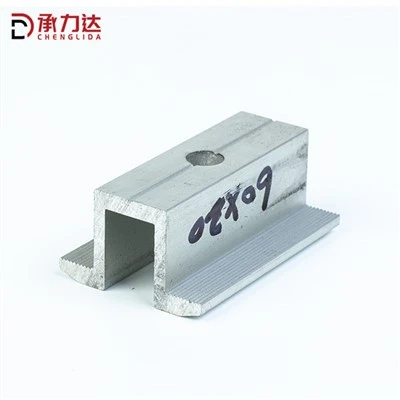
If you’re dealing with lightning-related damage to your PV accessories, or you want to upgrade your system to be more storm-resistant, feel free to reach out to discuss your specific needs. We’re here to help you pick the right parts for your site, test them for surge tolerance, and make sure your array stays up and running no matter what the sky throws at it.
Other Photovoltaic Accessories References:
- National Renewable Energy Laboratory. (2021). Lightning Surge Mitigation for Photovoltaic Systems. NREL/TP-5400-78921.
- Underwriters Laboratories. (2022). Standard for Surge Protective Devices for Use in Photovoltaic Power Systems, UL 1741.
- International Electrotechnical Commission. (2020). Low-voltage surge protective devices – Part 1: Performance requirements and testing methods, IEC 61643-1.
- Solar Energy Industries Association. (2023). Utility-Scale Solar Array Reliability: Post-Storm Damage Analysis. SEIA Technical Report TR-007.
Wuxi Chenglida Machinery Co., Ltd.
We are one of the most professional photovoltaic accessories manufacturers and suppliers in China, also support customized service. Please feel free to buy durable photovoltaic accessories made in China here from our factory. Quality products and reasonable price are available.
Address: No.4 Ruifeng Road, Huishan District, Wuxi City
E-mail: postmaster@wxcldjx.com
WebSite: https://www.wuxi-chenglida.com/
