If you’ve ever worked with metal wire—whether you’re a DIY enthusiast, a fabricator, or someone picking up parts for a big project—you know that even a tiny kink can derail a whole day. At the metal wire supply company I work for, we get so many calls every week from folks saying, “I ordered wire that’s supposed to be straight, but it arrived with bends—how do I fix this without ruining it?” Straightening metal wire isn’t just about pulling it; it’s about knowing your wire type, the right tools, and how to avoid making things worse. Let’s break this down like we chat with our regular clients, no stuffy lab jargon here. Metal Wire
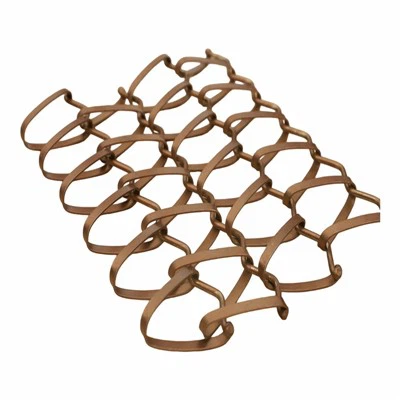
First off, why does wire get bent in the first place? It’s not just bad luck. When we spool wire for shipping, we have to wind it tight to save space—especially for long lengths. For softer wires, like copper or annealed steel, that wind can leave a “memory” of the coil, so when you cut it, it wants to spring back into a curve. Even stiffer wires, like stainless steel, can get kinked if it’s dropped, tugged awkwardly, or not handled right during shipping. I once had a client who’d ordered 50 feet of 12-gauge steel wire, left it on his loading dock for a week, and when he picked it up, it had a big bend from where a pallet had rolled over it. Oops. So first step: figure out what kind of wire you’re working with, because that changes everything.
If you’re dealing with small-gauge wire—think 18-gauge or thinner, used for jewelry making, craft projects, or small fasteners—this is the easiest spot to start. I’d guess most people mess up here by yanking it too hard. Let’s say you have a 6-inch piece of kinked 20-gauge brass wire. Don’t grab both ends with pliers and pull like you’re trying to break it—you’ll just make a bigger kink or snap it. Instead, lay the wire flat on a hard, smooth surface, like a workbench top or a piece of thick plywood. Then take something with a flat edge—like a metal ruler, a level, or even the side of your bench. Hold one end of the wire down lightly with your non-dominant hand, then run that flat edge along the bent part, applying gentle, even pressure as you go. If it’s a small kink, two or three passes should do it. For really tiny bends, I’ve even used the edge of a credit card (just make sure it’s not your good one!) to smooth it out. The key here is that small-gauge wire is soft, so too much pressure can stretch it out and make it thinner in spots—you want to just push the kink flat, not flatten the whole wire.
Now medium-gauge wire, like 10 to 16 gauge, used for fencing, small brackets, or craft furniture. This is where you might need a little more oomph, but still not brute force. Let’s say you have a 10-foot piece of 12-gauge steel wire that’s coiled up and has a spring to it. Don’t just unwind it and try to straighten it by hand—you’ll end up with more curves. A trick we teach a lot of our commercial clients is a wire straightener tool. These are cheap, handheld tools with two sets of grooved wheels: one set pulls the wire in, the other pushes it straight. You just feed the kinked wire through the grooves, turn the handle, and it pulls the wire straight as it comes out. I once tried this with a 12-gauge wire that I’d messed up on a home project, and it worked way better than pulling it by hand. If you don’t have a straightener tool, another option is to clamp one end of the wire to your workbench (use a vise, not just a cheap clamp—you don’t want the wire slipping) and then tie a light weight to the other end. A 5-pound dumbbell or a bucket full of sand works. Let it hang for a few hours, and the weight will gently pull out the curves without stretching the wire too much. Just make sure the ground under it is clear—no one wants a dumbbell falling and denting their floor.
Then there’s thick-gauge wire, like 8 gauge or thicker, used for heavy fencing, industrial brackets, or structural parts. This stuff is stiff—you can’t bend it by hand, and brute force can actually damage it by causing tiny cracks (called “work hardening”) that make it break later. Here’s where you have to be extra careful. We get calls from construction guys all the time saying their 8-gauge galvanized wire arrived bent, and they need to fix it fast. For thick wire, the best method is heat straightening, but only if you’re okay with a little discoloration (it won’t affect the strength, I promise). Take a propane torch, heat the bent part of the wire until it’s a dull red color (don’t get it glowing bright hot—you don’t want to melt it), then immediately quench it in cold water. Wait, hold on—don’t do this if your wire is a type that can’t handle heat, like some aluminum alloys. Stick to steel or stainless steel here. The heat softens the metal’s memory, and the quenching locks it straight. I’ve tested this on thick wire for a farm fence, and it worked way better than trying to pull it with a winch. If you don’t have a torch, a heavy-duty pipe wrench might work, but go slow—apply pressure a little at a time, check the bend every few minutes, so you don’t overdo it and snap the wire.
Wait, a lot of people ask us: can I straighten wire multiple times? Short answer: not really. Every time you bend and straighten metal, you’re doing something called work hardening—makes the wire harder, but also more brittle. If you straighten a kink three or four times, eventually it’ll snap when you put tension on it. That’s why we always tell clients to buy straight wire in the first place if they can help it. We stock a ton of straight wire rolls here—no kinks, no spring—ready to use right away. A lot of DIY folks don’t realize that buying pre-straightened wire saves way more time than messing with kinked stuff, especially for big jobs.
Also, a common mistake I see: people using too much pressure on soft wire. I had a crafter last month who straightened 22-gauge silver wire with pliers, and it ended up so thin in the spots where he squeezed that it broke when he tried to wrap it. So for soft metals—copper, brass, annealed steel—go super light pressure, use smooth tools (no jagged pliers edges), and take it slow. For hard metals—stainless steel, galvanized steel—you can push harder, but still avoid sudden, sharp forces.
Another quick tip: if your wire is still on a spool, don’t unwind it all the way at once. Unwind about 3 feet at a time, straighten that, then unwind the next section. If you unwind the whole 50 feet and lay it on the ground, it’ll just get more kinks as it rolls around. We include a little tag on every spool of wire we ship that says “unwind slowly” for exactly that reason.
Now, when should you just throw the wire out? If there’s a sharp kink—one that looks like it’s crimped, not just bent—or if it’s got rust spots that make it brittle, don’t bother straightening it. Those kinks are signs the metal’s already damaged, and straightening them will just make it break. Just send it back to us—we’re happy to replace it, no questions asked. That’s the perk of working with a local wire supplier, right? We don’t make you jump through hoops if the wire arrives not up to snuff.
So let’s wrap this up. Straightening metal wire is all about matching your method to the wire gauge and type. Small gauge = gentle flat surface smoothing. Medium gauge = handheld straightener or weighted tension. Thick gauge = controlled heat and quenching. And don’t forget: prevention is way easier than fixing kinks. If you’re gearing up for a project, hit us up for pre-straightened wire—we’ve got everything from thin craft wire to thick industrial grades, and we ship fast.

If you’ve got a wire straightening story, or you need a quote for your next project, just reach out to our team. We’re here to help you get the right wire for your job, no hassle.
Copper Wire Mesh References:
- Metals Handbook: Forming and Forging, American Society for Metals, 1988.
- Wire Straightening Techniques for Fabricators, Modern Machine Shop, 2021.
- Work Hardening in Common Metal Alloys, Journal of Manufacturing Processes, 2019.
Anping Chenran Wire Mesh Co., Ltd.
We’re well-known as one of the leading metal wire manufacturers and suppliers in China. With a professional production team, we are able to meet the needs of the majority of our customers. Please rest assured to buy high quality metal wire in stock here from our factory.
Address: 500 Meters North of Guozhuang Village, Daziwen Town, Anping County, Hengshui City, Hebei, China
E-mail: sales@chenranwiremesh.com
WebSite: https://www.chenranwiremesh.com/
