When you’re running a commercial HVAC or refrigeration system, your condensing unit is basically the unsung workhorse—it’s the part that pushes heat out of your space so the whole system can keep your goods cold or your building at a comfortable temp. As a condensing unit supplier, I get a ton of questions about lifespan: “How long should mine last?” “Am I wasting money if I replace it early?” “Can I stretch it another year?” The truth is, there’s no one-size-fits-all answer, but there are hard truths and practical hacks that’ll help you make sense of it all. Condensing Unit
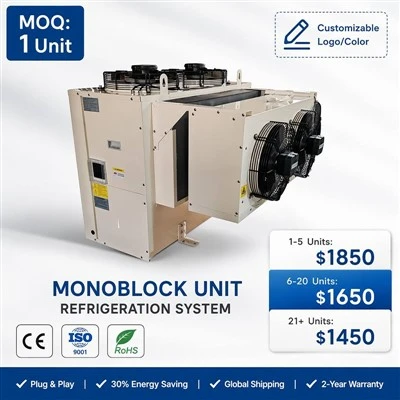
First, let’s cut through the confusion: the average lifespan of a quality condensing unit (the kind we supply) is 10 to 15 years. Wait, 10 to 15? That’s a big range, right? I’ve seen ones conk out at 7, and others still chugging along at 18. So what makes the difference? A lot of it’s not the unit itself—it’s how you treat it. Let’s break that down.
Start with usage. If your unit is running 24/7, 365 days a year (think a grocery store display cooler, not a small retail shop that shuts down at 10 PM), it’s going to wear out way faster than one that only runs 8 to 10 hours a day. I’ve had a customer with a small restaurant unit that’s 14 years old and still works like a champ—they only fire it up for dinner and shut it down overnight. Meanwhile, a nearby cold storage facility pushed their two units to 6 years before they needed replacements; constant heavy load, no downtime to let parts cool down properly, that’s killer on compressors and fans.
Then there’s maintenance. This is the biggest lever you can pull to extend your unit’s life, and it’s wild how many people skip it. A condensing unit isn’t a set-it-and-forget-it machine. You’ve got to clean the coils—those get clogged with dust, dirt, pollen, grease (if it’s a kitchen unit) over time, and a dirty coil makes the compressor work 20% harder than it needs to. I’ve seen a unit with coils so caked in gunk that the compressor burned out in 4 years, when it should’ve lasted 12. Also, check the refrigerant levels. Too much or too little? Both wreck the compressor, which is the heart of the unit. If your tech isn’t doing annual checkups on refrigerant pressure, you’re rolling the dice. And don’t sleep on the fans—make sure the blades aren’t bent, the motor’s lubricated, and there’s no debris blocking the fan guard. Small, cheap maintenance adds years to your unit.
Install quality matters too. We’ve seen way too many cases where a customer bought a budget unit from someone who cut corners on installation. If the lineset’s not sized right, or the unit’s not level, or there’s air in the refrigerant lines, that’ll kill performance fast. When we install our units (or when our customers hire a reputable local tech), we triple-check every connection, pull a vacuum to get all moisture out of the lines, and test the charge before we fire it up. That initial work makes a way bigger difference than most people realize.
Wait, what about residential condensing units vs. commercial? A lot of people mix these up, but they’re worlds apart. Residential ones are usually smaller, run less continuously, and many have a lifespan of 12 to 18 years. Commercial units? That’s where the 10 to 15 average comes in, because they’re handling way heavier loads, more frequent use, and harsher environments. A commercial unit in a dusty warehouse or a greasy kitchen will die way sooner than one in a climate-controlled office.
Also, let’s talk about when you should replace a unit, even if it still sorta works. I get it—repairing a $1,000 unit that’s 12 years old feels like a steal, but here’s the thing: old condensing units are way less efficient than new ones. A 10-year-old unit might use 30% more energy than a new Energy Star model. Over a year, that’s hundreds, even thousands, of dollars in extra utility bills. And as parts get harder to find, repairs get pricier. Last year, a customer came to us with a 13-year-old unit that needed a compressor replacement—they quoted $1,800 for the compressor alone, plus labor. A new comparable unit was $2,500. They went with the new one, and a year later, their energy bills dropped by $60 a month. That math adds up fast.
I’ve also seen a lot of myths floating around. Some people say “if it’s still blowing cold air, it’s fine.” No, that’s not true. A unit can be running cold but working way too hard, burning out parts early, or wasting energy. Another myth: “you can just repair it forever.” Once a unit hits 10 years, multiple repairs (especially for major parts like compressors or fans) start to make replacement the smarter call. Think of it like a car: if you have a 10-year-old car, and you need a $2,000 engine repair, it’s probably better to put that toward a new car, rather than sinking more money into a machine that’ll keep breaking.
What about units that last longer than 15 years? Sure, they exist. But those are the exceptions, not the rule. Usually, those are from brands that build heavy-duty parts, and the owners are religious about maintenance. I had a customer with a refrigeration unit that’s 20 years old—they do quarterly coil cleans, annual tune-ups, and they upgraded the fans a few years back to help with performance. But even that unit is on its last legs, and they’re already planning a replacement for next year. Pushing a unit too far past its lifespan is risky—it can break unexpectedly, which means your whole HVAC or refrigeration system goes down, and that’s way more costly than proactive replacement.
Now, let’s talk about what you can do to get the most out of your condensing unit. First, set up a regular maintenance schedule—twice a year for commercial units, once a year for residential. Ask your tech to check coil cleanliness, refrigerant levels, fan operation, and compressor pressure. Second, if your unit is over 10 years old, start budgeting for a replacement. Don’t wait till it dies on you—plan ahead so you’re not scrambling for a last-minute purchase. Third, when you do replace it, go for a quality unit that matches your load needs. A unit that’s too big for your space will short cycle (turn on and off nonstop), which wears it out fast. A unit that’s too small will run nonstop, overheating parts. That “right-sizing” is key.
I know this sounds like a lot, but it’s all practical stuff that saves you money in the long run. As a condensing unit supplier, my goal isn’t just to sell you a new unit—it’s to help you make it last as long as possible, because I’d rather have a repeat customer than a one-time sale. I’ve seen too many people cut corners on maintenance or install, end up with a unit that dies early, and come back frustrated. The good news is that with a little care, your condensing unit can hit that upper end of the lifespan range, or even beat it.
At the end of the day, lifespan isn’t just a number on a spec sheet. It’s a mix of build quality, how you use it, and how you care for it. If you take care of your unit, it’ll take care of you. If you ignore it, you’re looking at early replacements and costly breakdowns.
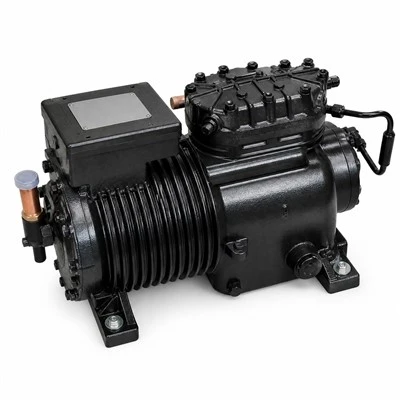
If you’re not sure where your condensing unit stands, or you’re ready to upgrade before it fails, we can chat. We can help you figure out if a repair or replacement makes sense, and get you a unit that fits your specific needs and budget. No pressure, just solid advice from someone who’s been in the game for years. Don’t wait till your unit breaks—reach out and let’s work out the best plan for your space.
Water-Cooled Condenser References:
- Air-Conditioning, Heating, and Refrigeration Institute (AHRI). (2022). Commercial HVAC Equipment Lifespan and Replacement Guidelines.
- U.S. Department of Energy. (2021). Energy Efficiency Tips for Commercial HVAC Systems.
- Refrigeration Service Engineers Society (RSES). (2020). Condensing Unit Maintenance Best Practices for Commercial Applications.
- HVAC Excellence. (2023). Factors Impacting Condensing Unit Service Life and Performance.
Hangzhou Sino-cold Sci-tech Co., Ltd.
Hangzhou Sino-cold Sci-tech Co., Ltd. is one of the most professional condensing unit manufacturers and suppliers in China, also supports custom service. We warmly welcome you to wholesale advanced condensing unit made in China here from our factory. If you have any enquiry about cooperation, please feel free to email us.
Address: Yunshang Science and Technology Park, No.776 Wenxi Road, Hangzhou, Zhejiang Province, China
E-mail: han@cnrefrig.com
WebSite: https://www.cnrefrig.com/
