What’s the Weight of a 2 Inch Seamless Carbon Steel Tube? Let’s Break It Down Like We Do for Our Clients Every Day Seamless Carbon Steel Tube
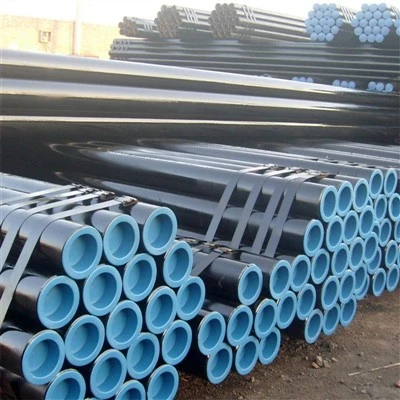
Hey there, if you’ve ever browsed our site or shot us a message asking about steel specs, you’ve probably wondered this at some point. “2 inch seamless carbon steel tube” sounds straightforward, but weight isn’t just a random number—it’s make-or-break for every project, right? Whether you’re a fab shop building scaffolding, a plumber rigging industrial pipes, or a hobbyist throwing together a custom frame, getting the weight right keeps you from overspending on shipping, underestimating load capacity, or even running into compliance issues.
Before we dive into numbers, let’s get one thing straight: when we say “2 inch” tube, we’re not talking about the exact outer diameter of the pipe. Wait, hold on—wait a second, don’t roll your eyes at that. I know, pipe sizing is weird, but it’s crucial here. For seamless carbon steel tubes (that’s our specialty, by the way—seamless means no welded seams, so they’re stronger, hold pressure way better, and don’t leak like some welded tubes do when you crank up the heat or volume), a 2 inch nominal size refers to a standard that’s been around for decades, mostly based on inside diameter (ID) for threaded pipe. But for weight, the key number we use is outer diameter (OD) and wall thickness. That’s where most people get mixed up, and it changes the weight more than you’d think.
Let’s stick to the most common wall thicknesses for 2 inch seamless carbon steel tubes because that’s 90% of what our clients order. When a client asks for a standard 2 inch tube, they’re almost always picking from Schedule 40, Schedule 80, or sometimes Schedule 10 if they need super light stuff. Let’s break those down, because each has a different OD and wall thickness, hence a different weight.
First, Schedule 40. That’s the workhorse. If you’ve ever seen a standard plumbing pipe or structural tube, that’s Schedule 40. For 2 inch nominal, its outer diameter is 2.375 inches (yeah, not 2 inches—nominal size is just a label). The wall thickness here is 0.154 inches. Now, how do we calculate weight? There’s a formula we use every single day, no fancy math required. The standard formula for carbon steel pipe weight is: Weight per foot (in pounds) = (OD – Wall Thickness) × Wall Thickness × 10.69. That 10.69 is a constant we use for carbon steel, it accounts for density and unit conversion. Let’s plug in Schedule 40: OD is 2.375, wall is 0.154. So (2.375 – 0.154) × 0.154 × 10.69. Let’s do the math: 2.221 × 0.154 is 0.342, times 10.69 is roughly 3.65 pounds per foot. Wait, that’s right—each foot of 2 inch Schedule 40 seamless carbon steel tube is about 3.65 lbs. Makes sense, that’s the number we tell all our first-time clients when they ask.
Next up, Schedule 80. That’s the heavier-duty one for high-pressure stuff—like industrial piping carrying steam, or structural applications where strength matters more than cost. Schedule 80 for 2 inch nominal has the same outer diameter? Wait, no—wait, no, same OD for the same nominal size, right? Yeah, that’s another pipe thing: OD stays the same for a given nominal size, wall thickness changes. So Schedule 80 wall thickness is 0.218 inches. Plug into the formula: (2.375 – 0.218) × 0.218 × 10.69. 2.157 × 0.218 is 0.47, times 10.69 is around 5.02 pounds per foot. That’s over a pound heavier per foot—noticeable if you’re ordering 20 foot sticks, that’s 30 extra pounds total, which adds up on shipping.
Then there’s Schedule 10, the light option. That’s for non-structural, low-pressure uses like fence posts or hobby projects where you don’t need a ton of strength. Schedule 10 wall thickness for 2 inch is 0.109 inches. Formula time: (2.375 – 0.109) × 0.109 × 10.69. 2.266 × 0.109 is 0.247, times 10.69 is about 2.64 pounds per foot. That’s almost a full pound lighter than Schedule 40—great if you’re handling the tube yourself, no need for a forklift, but don’t use it for something that needs to hold weight, obvious reason there.
Wait, but hold on—what if someone actually means a tube with an exact 2 inch outer diameter? Like, not nominal, exact 2 inches OD? We get that question too, mostly from custom fab guys. If it’s seamless carbon steel, 2 inch OD, the weight changes based on wall. If you take the common wall thickness for a 2 inch OD tube, say 0.120 inches (that’s a common “thin wall” spec for tubing, not standard pipe), the weight per foot would be (2 – 0.12) × 0.12 × 10.69 = 1.88 × 0.12 × 10.69 = roughly 2.41 pounds per foot. But that’s not a standard nominal pipe, so most people don’t mean that when they say 2 inch tube—they mean nominal, which is what we sell out of inventory 9 times out of 10.
Now, why does this matter for you as a buyer? Let’s be real, we’ve had clients come back confused because they ordered 100 feet of tube and thought it’d be 365 pounds (100 × 3.65) but got something way heavier or lighter. That’s almost always a mix-up between nominal size and actual specs. For example, if you ordered Schedule 80 instead of Schedule 40, that’s 137 extra pounds for 100 feet—way more than you budgeted, and you have to pay extra shipping because the load is heavier. Or if you grabbed Schedule 10 thinking it’d be Schedule 40, that tube might bend under the load you’re putting on it, leading to project delays.
Another thing: seamless vs. welded. We’re biased, obviously, but seamless carbon steel tube is different from welded. Welded tube has a seam that’s been fused together, so its density isn’t the same as seamless—wait, no, actually the formula works for both, but seamless can have a more consistent wall thickness, so the weight per foot is way more accurate. Welded might have a slight thick spot at the seam, so your actual weight could be a couple ounces off, which doesn’t sound like a lot but adds up over long lengths. That’s why most industrial clients go seamless—consistency is everything for their projects.
Let’s also talk about why this weight number isn’t universal. The 10.69 constant I mentioned earlier? That’s for carbon steel, which has a density of about 490 pounds per cubic foot. If we were talking about stainless steel, that constant would be higher (around 14.29) because stainless is denser, so a 2 inch stainless tube would weigh more. But we only deal in carbon steel here, so that number stays the same. Also, these are theoretical weights—sometimes small variations in wall thickness (manufacturing tolerances) can make a 10 foot tube a pound or two different, which is normal for steel production. We always note that on our spec sheets, so our clients don’t freak out when their order doesn’t match the exact calculated number.
Wait, let’s make this relatable. Grab a piece of paper, write down the numbers: 3.65 lbs per foot for Schedule 40. That’s about the weight of a standard laptop, right? A 10 foot stick is the weight of a large dog, a 20 foot stick is like carrying a 50 gallon water drum. That’s a good way to visualize it—no more just looking at a number. If you’re ordering 50 sticks of Schedule 40, that’s 50 × 20 ft = 1000 feet total, so 3650 pounds of steel—almost 2 tons. That’s not something you want to miscalculate, because shipping a 2 ton load costs way more than shipping a 1 ton load.
Now, let’s address the elephant in the room: why don’t all suppliers just list the weight? Oh, they do, but sometimes they hide it in a spec sheet, or they list nominal size and forget to note wall thickness. That’s why we make it easy—every product page for our 2 inch seamless carbon steel tubes has a clear weight per foot, per 20 foot stick, and even total weight for bulk orders. No guesswork, no hidden fine print.
If you’re still confused about which spec you need—Schedule 40, 80, 10, exact OD, whatever—just send us a message. We don’t push the most expensive stuff, we ask you what your project is: are you building a fence? Scaffolding? Industrial piping? A custom bike frame? Then we’ll tell you the right weight and spec, no fluff. We’ve been doing this long enough that we’ve seen every mistake—from guys ordering Schedule 10 for a bridge beam (don’t do that) to guys needing extra heavy tube for a pressure tank and grabbing Schedule 40. We’ll save you the headache.
Whether you’re a first-time buyer or you’ve been ordering seamless tube for years, getting the weight right is non-negotiable. It affects your budget, your timeline, and even the safety of your project. The 2 inch seamless carbon steel tube weight isn’t a random stat—it’s a number that ties back to how you’ll use the tube, how you’ll transport it, and how it’ll hold up when you install it.

If you’re ready to check what we have in stock, or you need a custom cut length, hit us up to talk through your needs. We can send you a spec sheet with exact weights, or even a sample if you want to hold one and feel how heavy it is. No hoops to jump through, no sales jargon—just straight answers about steel, because that’s what we do.
Welded Pipe Stainless Steel Tube References
- American Society of Mechanical Engineers (ASME). B36.10: Welded and Seamless Wrought Steel Pipe. ASME International, 2021.
- Steel Tube Institute. Seamless Steel Tube Specification and Weight Calculation Guidelines. Steel Tube Institute, 2022.
- Materials Science and Engineering Network. Density of Carbon Steel: Practical Manufacturing Applications. MSE Network, 2023.
GNEE STEEL(TIANJIN)CO.,LTD
Gnee Steel (Tianjin) Co., Ltd. is one of the most professional seamless carbon steel tube manufacturers and suppliers in China, specialized in providing high quality customized service. We warmly welcome you to wholesale discount seamless carbon steel tube for sale here and get free sample from our factory. Good service and low price are available.
Address: No.4-1114, Beichen Building, Beicang
E-mail: info@gneepipe.com
WebSite: https://www.chinaalloypipe.com/
