If you’ve ever tackled a garage upgrade—whether it’s adding a new workspace, installing power tools, or setting up EV charging—you’ve probably asked a common question: Can I use house wire in a garage? As a house wire supplier who’s worked with homeowners, electricians, and DIYers for over a decade, I get this question all the time. The short answer is… it’s not that simple. Let’s break down the science, code rules, and real-world considerations to help you make the right call for your space. House Wire

First, let’s clarify what “house wire” usually means for residential use. Most people refer to non-metallic sheath (NM) cable—common brands like Romex, but we supply our own high-grade NM-B house wire for residential interiors. This wire is designed for finished, climate-controlled indoor spaces: think living rooms, bedrooms, or finished hallways. It has a plastic jacket around the insulated conductors, and its outer sheath is thin, flexible, and meant to stay protected from physical damage and extreme temperatures.
Garages? They’re a whole different animal. Unlike your living room, a garage is an unfinished, semi-exposed space with temperature swings, potential physical abuse, and exposure to moisture, chemicals, and even rodents. That’s why building codes (including the U.S. NEC, National Electrical Code) have specific rules for garage wiring—and why standard house wire often falls short.
Let’s start with temperature. NM house wire is rated for a maximum ambient temperature of 90°F (32°C) when installed, but garages can get way hotter. On a 100°F summer day, the surface of a garage ceiling or wall can easily hit 120°F or higher. For NM wire, operating beyond its rated temperature weakens the insulation over time. That insulation is what prevents short circuits, so overheating can lead to fraying, breaks, or even fires. We’ve seen too many cases where a homeowner ran standard NM house wire in a garage, only to have the insulation crack after a few years from heat, leading to electrical issues.
Then there’s physical damage. Garages are where you store lawn tools, move ladders, park cars, and work on projects. A standard NM house wire’s thin outer sheath isn’t designed to take hits from a wrench, a lawnmower blade, or even a car door swinging open. If the sheath tears, the bare conductors are exposed—creating a shock hazard or the risk of shorting out against metal studs or other surfaces. Some DIYers try to run NM through metal conduit, but conduit adds cost and labor, and even then, NM isn’t rated for the same physical abuse as wires made for exposed areas.
Moisture and chemicals are another big factor. Garages can get damp from rain seeping through windows, snowmelt dripping off the roof, or even a spilled bucket of paint or cleaning supplies. Standard house wire isn’t moisture-resistant. Its insulation can absorb water, leading to corrosion on the copper conductors or breakdown of the insulation. If you’re storing chemicals like gasoline, oil, or solvents in the garage, those can eat through the plastic outer sheath of regular house wire, exposing live wires and creating a severe fire risk. We supply moisture-resistant house wire for some applications, but even that isn’t always enough for the harshest garage conditions.
Now, that doesn’t mean you can never use house wire in a garage—but it has to be the right type, installed correctly. Let’s clear up a common mix-up: NM-B is fine for some garage spaces, but only if it’s properly protected and rated. Wait, what? The NEC does allow NM wire in garages, but with strict caveats. For example, if you’re running NM wire along walls or ceilings, it has to be mounted with staple fasteners every 4.5 feet or so, and it has to be protected from physical damage by at least 1.25 inches of drywall, or by running it through metal or plastic conduit. Also, NM can’t be used within 7 feet of the garage floor unless it’s in a raceway or protected. That’s a key rule most DIYers miss—so if you do use house wire in a garage, you can’t just staple it to a wall stud exposed to potential hits.
For areas that are more exposed, like near a workbench, near a vehicle, or in a garage with unfinished concrete walls exposed to moisture, you’ll need a different type of wire. Here’s where our industrial-grade house wire comes into play. We supply THHN/THWN-2 wire, which is a tough, thermoplastic-insulated wire rated for both indoor and outdoor use, and resistant to moisture, chemicals, and physical damage. THWN-2 is even rated for wet locations, which makes it perfect for damp garage spaces. Unlike standard house wire, THHN has a thinner insulation per conductor, but its individual insulation and outer jacket are far more durable. It can handle extreme temperatures—up to 90°C for dry locations and 75°C for wet locations, which is ideal for garages that swing between hot summers and cold winters.
Another mistake I see: people using outdoor extension cords as permanent wiring in the garage. Those are designed for temporary use, not for running through walls or ceilings. Even if they’re heavy-duty, extension cords aren’t built to handle the constant load of permanent garage wiring, and their connectors can loosen over time, creating a hazard. If you need to add a circuit for a garage door opener, EV charger, or workbench outlets, permanent wiring is a must—and that means choosing wire rated for garage conditions.
Let’s talk about why this matters for your safety. Electrical fires are a leading cause of home disasters, and a lot of those start in garages because of incorrect wiring. When you use the wrong wire, you’re not just risking a small outage—you’re putting your family, your tools, and your home at risk. As a house wire supplier, we’re not just selling wire; we’re helping people choose the right product for their space. We’ve had customers come to us after a wiring scare in their garage, and more often than not, it was because they tried to cut corners with standard house wire instead of a wire designed for the job.
If you’re a DIYer, there’s also the code angle. Most local building departments require permits for garage electrical work, and inspectors will check that your wire and installation meet NEC rules. Using standard house wire in a way that violates code can lead to your project being rejected, forcing you to redo the wiring at extra cost. For electricians, specifying the right wire for a garage is non-negotiable—it’s part of their job to keep their clients safe and compliant.
So, when can you use house wire in a garage? Let’s summarize:
- If you’re running it in a finished section of the garage, fully protected from physical damage and extreme temperatures (e.g., a finished office nook), and it’s rated for indoor use (NM-B), that’s acceptable. But even here, make sure it’s not exposed to moisture or high heat.
- If you’re using it in a utility room attached to the garage, with proper insulation and climate control, standard house wire works.
- For most of the garage’s main space—walls, ceilings, work areas, near the floor, or exposed to heat, moisture, or chemicals—stick to wire rated for harsh conditions, like THHN/THWN-2 or our commercial-grade house wire that’s built for durability.
Now, let’s address a common counterpoint: “My neighbor used regular house wire in their garage for 20 years and never had a problem.” That’s great, but it’s not a safe bet. Wiring failures often happen over time, not immediately. The stress of temperature swings, moisture, and physical damage builds up slowly—you might not notice a frayed insulation until it’s too late. We’ve seen wires that looked fine on the outside have hidden cracks from years of heat, leading to an electrical arc that started a fire. It’s not worth risking your home for a small savings on wire.
As a supplier, we work with both DIYers and professionals, and we always emphasize that choosing the right wire is an investment in safety. Our house wire line includes options for every scenario: standard NM-B for interior finished spaces, moisture-resistant NM for semi-damp areas, and heavy-duty THHN/THWN for garages, outdoor workshops, and other harsh environments. We can help you calculate how much wire you need, what gauge is right for your circuit (14-gauge for light loads, 12-gauge for power tools, 6-gauge for EV chargers), and answer any questions about code requirements.
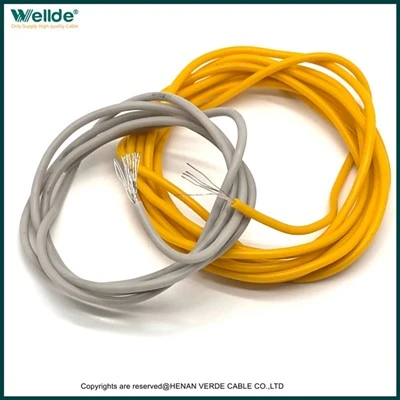
If you’re planning a garage wiring project—whether it’s adding outlets, installing a EV charging station, or updating your garage door opener—don’t leave it to chance. Reach out to our team to discuss your needs. We can guide you through selecting the right wire, explain installation best practices, and make sure you’re compliant with local electrical codes. Avoid the hassle of redoing work, and most importantly, prioritize safety by choosing wire designed for your garage’s unique conditions.
PVC Cable References: National Electrical Code (NEC) Article 334 (Nonmetallic-Sheathed Cable) and Article 340 (Thermoplastic Insulated Wires); Underwriters Laboratories (UL) Standard 83 for NM Cables; Underwriters Laboratories (UL) Standard 83 for THHN/THWN Wires.
Henan Verde Cable Co., Ltd.
Henan Verde Cable Co., Ltd. is well-known as one of the leading house wire manufacturers and suppliers in China. Please feel free to wholesale high quality house wire in stock here from our factory. All products are with high quality and competitive price. Contact us for price list.
Address: Rm 1508, Kaixuanmen Building B#, No.238 Tongbai South Road, Zhengzhou City, Henan Province, China. 450006
E-mail: linda@welldecable.com
WebSite: https://www.welldecable.com/
