If you’re in the glass processing game, you’ve probably come across two core tools that keep your operation running: horizontal and vertical glass grinding machines. As someone who’s supplied glass processing machinery for over a decade, I get it—telling these two apart can feel confusing if you’re not super deep in the weeds. Let’s break it down like we’re chatting over a coffee at a trade show, no jargon overload, just real talk about what makes each machine tick, when to use which, and why picking the right one makes a huge difference for your workflow. Glass Processing Machinery
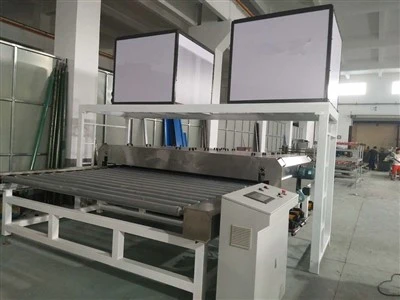
First off, let’s start with the basics: what’s the core physical difference between horizontal and vertical glass grinding machines? It all comes down to how the glass sits and moves through the machine. Horizontal machines lay flat, like a sheet of glass on a conveyor belt, moving across the machine’s work surface while grinders and polishers touch the edges. Vertical ones stand the glass upright, held securely by vacuum clamps, as it moves vertically past fixed grinding heads. That tiny, simple difference is where every other part of their design and performance comes from.
Let’s dive into horizontal glass grinding machines first—they’re the workhorses for most mid-sized to large glass shops, especially for big format glass. Think 10-foot by 12-foot windows, shower enclosures for whole bathrooms, or storefront glass panels. The flat, horizontal setup has some obvious wins, starting with load time. For big glass sheets, you don’t have to hoist them upright, which is a huge safety and time saver. Lifting a 500-pound sheet flat is way easier than balancing it vertical, especially if you’re working alone or with a small team. That’s why most high-volume shops that process large glass go horizontal.
But it’s not just load size. Horizontal machines handle edge work in a single pass way better for straight, continuous edges. They can grind both sides of the glass edge at once, plus polish, and even drill small holes if you need them. Wait, you might be thinking “drilling? On a horizontal grinder?” Yeah, a lot of modern horizontal ones have integrated drilling heads, so you don’t have to move the glass to a separate machine. That cuts down on handling time, which cuts down on breakage—huge, because glass breakage during transfers is one of the biggest hidden costs in glass processing.
Speaking of breakage, horizontal machines also give way more consistent edge quality for thin glass, right? If you’re working with 1/8-inch or even thinner glass for phone screens or small decorative panels, a flat setup keeps the glass perfectly rigid during grinding. No warping, no tiny micro-cracks that can weaken the edge later. The downside? Horizontal machines take up way more floor space. A machine that can handle 10-foot glass is going to be 15 feet long minimum, plus the conveyor space to load and unload. If your shop’s tight on space, that’s a big problem. Also, the flat setup means when you process edges, the only way to access the entire perimeter is to move the glass along the conveyor, so circular edges (like for a round tabletop) are trickier. You’d have to manually rotate the glass between passes, which slows things down and can lead to errors.
Now let’s talk vertical glass grinding machines. These are the smaller, nimbler ones, perfect for custom glass work, small to medium sheets, or curved edges. Think shower doors that aren’t straight, decorative glass with scalloped edges, or small mirror panels for vanities. The vertical clamp design lets the glass spin or rotate while it’s held upright, so you can grind curved edges easily. No manual rotating needed between passes—just program the curve into the machine, and it follows the shape. That’s a game-changer for custom orders that horizontal machines struggle with.
Vertical machines are also way more compact. A machine that handles 4-foot glass is only about 6 feet tall and 4 feet wide, so it fits even in a small shop with limited space. And they’re great for edge work that needs a precision finish, like the polished edges on a high-end shower door that people run their hands over a lot. Wait, but what about load size? Vertical machines top out at around 8 feet of glass, usually, and lifting that 8-foot sheet upright is more work. Also, because the glass is standing, if you’re working with very thin glass (under 1/4 inch), the clamp pressure can leave tiny marks or cause the glass to flex, leading to uneven edges. That’s why vertical machines aren’t the best for ultra-thin or extra-large glass.
Let’s get into the performance differences that matter most to you, the operator. Speed: Horizontal machines are faster for straight, large-quantity runs. If you have 50 identical storefront panels, a horizontal grinder can knock them out in an hour each, vs a vertical taking twice that, because you can’t batch process as easily. Vertical machines shine for low-volume, custom runs. If a customer comes in with one custom-shaped glass shelf, you don’t want to fire up a big horizontal machine that costs more to run—you just use a small vertical.
Edge finishing is another big one. Horizontal machines do a great straight edge, whether it’s a basic ground edge, a bevel (that sloped edge people like for mirrors), or a polished edge. A lot of high-end horizontal grinders have automatic beveling heads, so you can get that fancy look without extra steps. Vertical machines are better for specialty edges: rounded edges, curved edges, ogee edges (that classic scroll shape for old-style windows), and even mitered edges for picture frames. If you’re doing any custom work that’s not a straight line, vertical is the way to go.
Now, let’s talk maintenance, because that’s something a lot of new shop owners overlook. Horizontal machines have a lot of moving parts: the conveyor belt, the roller supports, multiple grinding and polishing heads spaced along the length. You have to keep the conveyor clean, check for misaligned rollers, and make sure the heads are calibrated evenly along the work surface. If one roller is a little off, it can cause a big glass sheet to warp during grinding, leading to ruined parts. Vertical machines are simpler mechanically. The main moving parts are the vacuum clamps and the rotating table. Less parts = less things to break, easier to clean, and lower maintenance costs overall. That’s a big plus for small shops that don’t have a full-time maintenance tech.
Wait, but there’s a middle ground, right? A lot of modern glass processing shops don’t have to pick one or the other. I’ve seen shops that run both: a big horizontal for all their high-volume straight glass, and a small vertical for custom orders. That way, you get the best of both worlds. But what if you’re a new shop just starting out, with a tight budget? You have to think about what your core work is. If 80% of your jobs are large, straight glass for apartments or storefronts, go horizontal. If 70% are custom shower doors, decorative glass, or small mirrors, start with vertical.
Let’s also clear up a common misconception: a lot of people think horizontal machines are only for flat glass, but that’s not true. Some advanced horizontal models can handle bent glass, like curved shower enclosures, as long as the bend is consistent. Vertical machines can’t do bent glass as well, because the clamp setup doesn’t adapt to curved surfaces. That’s another key point: if you’re working with bent or shaped glass, vertical is still your better bet for now, though we’re seeing some new horizontal models come out that can handle it, but they’re pricey.
Another thing to consider: breakage rate. I’ve had customers tell me they switched from vertical to horizontal for their large sheets and cut their breakage by 15% because there’s less handling. With vertical, you’re lifting the glass upright every time you load, so if you bump it, it breaks. With horizontal, you load it flat, roll it into the machine, and only touch it twice—load and unload. That’s a huge cost saver, because broken glass is just wasted money, especially if it’s a large, expensive sheet.
Now, let’s get practical: what questions should you ask when buying either machine? For horizontal, ask: what’s the maximum glass size it can handle, can it process beveled edges, and does it have integrated drilling (that saves you a whole separate machine). For vertical, ask: what’s the maximum glass length it can hold, does it have variable speed for different glass thicknesses, and can it handle custom edge programming. Also, ask about service support—since glass machinery needs regular calibration, you want a supplier who can come out fast if something breaks, not make you wait two weeks for a tech.
I’ve seen a lot of glass shops make the mistake of buying the cheapest machine they can find, without thinking about their actual workflow. A $10,000 vertical machine might seem like a steal, but if 90% of your work is large storefront glass, you’ll outgrow it in six months and have to buy a horizontal anyway. On the flip side, a $50,000 horizontal machine is a big investment, but if it cuts your production time by 20% and reduces breakage, it pays for itself in a year.
Let’s wrap this up. The core difference isn’t just how the glass sits—it’s about your business needs. Horizontal is for high-volume, large, straight-edged glass, low breakage, and big shops with space. Vertical is for small shops, custom, curved edges, low-volume work, and tight spaces. Most successful shops run both.

If you’re in the market for a glass grinding machine and still not sure which one fits your shop, reach out. We can talk through your current jobs, your space, your budget, and figure out what makes the most sense for you. No hard sell, just straight talk—we’ve been doing this long enough to know that the right machine makes all the difference.
Glass Machine Consumables References
- Glass Processing Machinery Association (GPMA) 2023 Equipment Guide: Horizontal vs Vertical Grinding Systems
- International Journal of Glass Science and Technology 2022: Efficiency Metrics for Glass Edge Finishing Machines
- Small Shop Glass Processing Association 2021: Workflow Optimization for Custom and High-Volume Orders
Foshan Sky Glass Co., Ltd.
We are one of the most experienced glass processing machinery manufacturers and suppliers in China. With a professional production team, we are able to meet the needs of the majority of our customers. Please feel free to wholesale advanced glass processing machinery for sale here from our factory. Customized orders are welcome.
Address: Jian Mei Business Center, Nan Hai Town, Fo Shan
E-mail: skyglassmanager18@gmail.com
WebSite: https://www.sky-glassdz.com/
