Hey there, if you’ve ever worked with hydraulic systems—think construction equipment, farm machinery, or even industrial manufacturing lines—you’ve probably come across axial piston pumps. As someone who’s been selling these things for over a decade (shoutout to my regulars who’ve joked I can tell a well-built pump from a worn-out one just by the sound it hums), the question I get more than any other is: “What’s the actual efficiency of these pumps?” Axial Piston Pump

I get it—efficiency isn’t just a buzzword. If your pump is wasting energy, that’s extra cash on electricity (or fuel, if it’s a mobile unit) and more heat to fight off, which means bigger cooling systems and more maintenance down the line. So let’s break this down like we’re chatting over a coffee in the warehouse, no fancy textbook jargon that’ll make your eyes glaze over.
First off, axial piston pump efficiency isn’t some single number you can pull off a spec sheet. It’s two separate things, really: volumetric efficiency and overall (or total) efficiency. Let’s start with the simpler one—volumetric efficiency. What that means is, how much of the fluid the pump should move actually makes it to the outlet, versus how much leaks back inside. Every pump has tiny gaps between parts, right? The pistons sliding in their bores, the swash plate, the valve plate that directs flow—all those little clearances. Fluid’s pressurized inside the pump, so some always sneaks back to the inlet side instead of going out where you need it.
Now, when does that leakage happen? If your pump is new, those gaps are tiny, so volumetric efficiency is high—usually 92% to 98%. But if you’re running a pump that’s been beat up for years, those parts wear down, gaps get bigger, and leakage goes through the roof. I’ve had customers come to me with pumps that used to move 50 gallons a minute, but now are only pushing 40, and half that drop is just fluid leaking back inside. That’s volumetric efficiency taking a nosedive—maybe down to 70% or worse.
Then there’s overall efficiency, which is the big one everyone cares about. That’s how much power you put into the pump (electric or mechanical horsepower driving it) compared to how much hydraulic power comes out (flow times pressure). This one factors in both volumetric efficiency and mechanical efficiency. Mechanical efficiency is all the friction losses—pistons scraping against their bores, the bearings spinning, the swash plate moving. Every time two metal parts rub, you lose power to heat instead of moving fluid.
So putting it together, overall efficiency for a well-maintained, properly sized axial piston pump is usually between 85% and 95%. Wait, that’s a wide range, right? Why? Because it depends on a bunch of stuff. Let’s talk about pressure first. If you’re running your pump at half its maximum pressure, efficiency is higher. Crank it up to full pressure—like 5,000 psi for heavy-duty stuff—and efficiency might drop a few points, maybe 88% instead of 92. Speed matters too. Too slow, and friction losses eat into efficiency; too fast, and cavitation can mess things up (that’s when air bubbles form in the fluid, collapse, and damage parts—also kills flow). And fluid type? Thick gear oil vs. lightweight hydraulic fluid? Thick stuff has more drag, so mechanical efficiency drops a little.
Here’s the thing I tell every new customer: axial piston pumps are way more efficient than other common pumps, like gear pumps or vane pumps, when they’re used correctly. Gear pumps might top out at 80% efficiency max, vane pumps around 85%, but axial piston pumps hold that 85-95 sweet spot—if you’re not abusing them. But that efficiency only stays high if you do the basics: use the right fluid, keep the reservoir full so no air gets in, replace filters regularly, and don’t run them at way higher pressure than they’re rated for. I’ve had a customer push a pump way past its pressure limit for months just to get more power, and by the time they brought it to me, the efficiency was down to 75%—and they had to replace half the pump’s internals.
Another myth I hear all the time: “New pumps are always the most efficient.” Not exactly. A cheap off-brand pump that’s thrown together with low-quality parts might be 85% when it’s brand new, but it’ll drop off fast after a year. A good axial piston pump from a reputable supplier (hello, that’s me) might be 90% when new, and stay around 85% for 10+ years if you take care of it. The difference is in the machining tolerances—our pistons and bores are ground to microns, not millimeters, so the gaps stay tiny even as parts wear. That’s why our pumps don’t leak as much, and the friction is lower.
Wait, let’s talk about real-world examples to make this concrete. Last year, a construction company came to me with three old excavators. Each had a 120 cc axial piston pump that was running at 82% efficiency. They upgraded to our high-efficiency version, same size, same max pressure. Their fuel usage dropped by 12%—because less energy was wasted as heat and leakage. They calculated that paid for the new pumps in less than 6 months. That’s the kind of real return on investment that makes efficiency matter, not just a number on a sheet.
What about when efficiency drops? How do you fix it? A lot of times, it’s not the whole pump—just worn parts. Like, if the valve plate is scratched, that can cause extra leakage, bringing volumetric efficiency down. Or the piston rings (yeah, most axial piston pumps have small seal rings on the pistons) are worn. I offer rebuild kits for exactly that—instead of buying a whole new pump, swap out the worn parts, and you’re back to 90% efficiency again. That’s a tip I give to everyone: monitor your pump’s flow and pressure over time. If you notice flow dropping without a change in system load, that’s a sign volumetric efficiency is going down. Catching it early saves you money.
Also, let’s not forget variable displacement axial piston pumps. That’s the type where you adjust how much the pistons move based on your system’s demand—so if you only need half the flow, the pump doesn’t move all the pistons. Those are even more efficient for systems that have variable loads, like machine tools or mobile equipment that works at different speeds. Their overall efficiency can hit 92-95% in ideal conditions, because they’re not wasting energy pumping extra flow you don’t need.
Here’s the mistake a lot of people make: looking only at initial efficiency. Sure, a cheap pump might have a slightly higher spec when new, but after 2 years, it’s 15% less efficient. A better pump from a good supplier (yep, mine) might only drop 2-3% in the same time. So over the pump’s life, you’re way better off with a higher-quality axial piston pump that holds its efficiency.
Let’s wrap this up so it’s not all pump jargon. So, what’s the efficiency of an axial piston pump? It depends on a few key factors:
- New vs. worn: New, well-built pumps hit 92-98% volumetric, 85-95% overall. Worn ones can drop to 70% overall.
- Operating conditions: Pressure, speed, fluid quality all tweak that number a few points up or down.
- Type: Variable displacement pumps are more efficient for dynamic loads than fixed displacement.
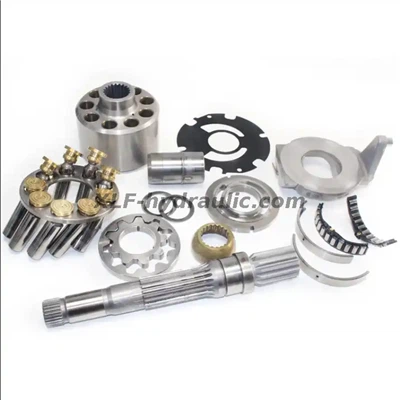
And as your go-to axial piston pump supplier, I’m not just here to sell you a pump. I’m here to help you get the most efficiency out of it. Whether you need a new pump, a rebuild kit, or help troubleshooting why yours is wasting energy, hit me up to chat through your needs. No sales pitch pressure, just real talk about what’ll work for your system.
Eaton Vickers Series References:
- Hydraulic Control Systems. Harry H. Asada, Jean-Jacques E. Slotine. John Wiley & Sons, 1986.
- Fluid Power Technology and Applications. Anthony J. Rosado. McGraw-Hill, 2004.
- Axial Piston Pump Design and Performance Analysis. S. Kamalasudhan, V. Balasubramanian. International Journal of Fluid Power, 2011.
Wuhan Xinlaifu Hydraulic Equipment Co., Ltd.
Wuhan Xinlaifu Hydraulic Equipment Co., Ltd. is one of the most professional axial piston pump manufacturers and suppliers in China, featured by high quality OEM&ODM products. Please feel free to buy customized axial piston pump from our factory.
Address: Liansu Industrial Park, No.1, Xincheng 11th Road, Dongxihu District, Wuhan, Hubei, China
E-mail: service@xlf-hydraulic.com
WebSite: https://www.xlf-hydraulic.com/
