Hey everyone, and welcome back to the blog! If you’ve ever waited in line for a roller coaster or spinning teacup, you’ve probably thought, “Wait, is this thing actually safe?” Well, as someone who’s been in the amusement ride vehicle game for over 12 years—building, testing, and tweaking these rides to make sure they work right—I’m here to pull back the curtain on exactly what we do before any ride even hits the park floor. No fancy jargon, no stuffy industry speak, just the real, gritty steps that turn a sketch of a coaster car into something that’s fun and safe for thousands of riders a year. Amusement Ride Vehicle
First off, let’s get one thing straight: testing starts way before we even build a single part. When a park comes to us with a new idea—say, a family-friendly coaster with a vintage wood vibe, or a spinning ride that tilts as it goes up a hill—we don’t just grab metal and start welding. We do what’s called “virtual prototyping” now, and yeah, it’s as cool as it sounds. We use 3D modeling software (think: SolidWorks, but way more customized for ride dynamics) to map out every single move. We plug in how heavy a full car is, how fast it’ll go around turns, how much G-force riders will feel, even what happens if a seatbelt gets tugged extra hard. Last year, a client wanted a new dark ride that used moving cars to follow animatronic characters—our model showed that if we cut the wheel base by 6 inches, the car would flip during a tight, sharp turn. We fixed that before we cut any metal, saving us weeks of rework and the park from a potential headache later. That’s the first line of defense, right? Catching problems on a screen is way easier than fixing them on a full-sized prototype.
Once the digital model checks out, it’s time to build a small-scale prototype. Like, 1/10th size, usually. For a coaster car, that means a tiny plastic and metal version, with no seats or fancy finishes, just the frame and wheels. We test this thing like it’s the real deal—we run it around a scaled track, we yank on the brake cables extra hard, we even bump it into the sides to see if it bends (spoiler: if it bends here, it’s going to snap when it’s full size with 4 people on it). A few years back, we were working on a big thrill ride car, and the small prototype’s frame twisted 2 degrees during a sharp stop. That might not sound like a lot, but when you scale that up, it would have twisted 20 degrees on the real track—enough to make a rider’s head hit the side of the car. So we changed the frame design, added an extra cross-beam, and then the small prototype passed with flying colors. This step is non-negotiable for us—we don’t move to full size until the small stuff is bulletproof.
Now, the part people actually care about: full-scale prototype testing. This is where things get loud, messy, and a little bit exciting. First up, structural load testing. That means we load the car with dead weight—like, concrete blocks, weighted bags, whatever it takes to match 110% of the maximum rider capacity. Wait, why 110%? Because riders aren’t always polite. A family of 4 might show up with a big cooler, or a group of teens might pile an extra person into a car to save a spot. We’ve seen it, so we plan for it. We put those weighted bags in every seat, strap them down tight, and then we do two things: first, we use strain gauges—these little metal strips that stick to the car’s frame and measure how much it bends or twists under pressure. If a gauge reads more than the safety limit (set by industry standards, more on that later), we go back to the drawing board. Last month, we tested a new spinning ride car, and the door hinge bent way more than it should when we loaded it. We replaced the hinges with heavy-duty stainless steel ones, and that fixed it.
Then there’s the dynamic testing—meaning, we actually move the car, like it would on a real ride track. For a roller coaster, that means putting it on a test track we have in our warehouse (we’re lucky enough to have a 200-foot track set up just for this). We run the car empty first, then with half weight, then full, then overloaded, checking for things like wheel wear, how well the brakes work, and if the car stays on the track through those tight turns. For a teacup ride, that means spinning it as fast as it’s designed to go, and even a little faster, to see if the bearings hold up. We also test for extreme weather, right? Rides get left out in rain, snow, 90-degree heat—so we blast the prototype with a pressure washer, bake it in industrial heaters, and even freeze it in a cold room to make sure the metal doesn’t warp or the plastic doesn’t crack. I remember a few winters back, we tested a car for a park in Minnesota, and the plastic side panels started to get brittle at 20 degrees. We switched to a different type of UV-protected plastic, and that solved the cold crack problem. No one wants a broken side panel in the middle of a Minnesota winter.
Wait, I can’t forget about the safety systems testing—because a ride is only as safe as its backups. Every amusement ride has layers of safety, right? We test every single layer. For seatbelts: we yank them with 500 pounds of force (that’s way more than a rider can pull) to make sure they don’t break or come undone. For lap bars: we simulate a rider slamming into the bar at top speed, to make sure it locks tight and doesn’t budge. For the brakes: we test both the primary brakes and the emergency brakes. If the primary brakes fail, the emergency ones have to stop the car within a certain distance, no exceptions. We also test the sensors—like, if a seat isn’t buckled, the car won’t start. We deliberately leave a seat unbuckled, and make sure the ride control system locks up before it moves. Last year, we had a glitch where one sensor didn’t pick up an unbuckled seat, so we adjusted the wiring and added a second backup sensor. That’s the kind of small detail that makes a big difference.
Oh, and here’s something most people don’t talk about: human factors testing. Yeah, we build the car to be safe, but we need to make sure it’s easy for riders and staff to use too. We get our friends, family, even local office workers to test the full prototype. We ask them: “Can you reach the seatbelt buckle? Is the lap bar comfortable? Do you feel like you’re going to hit your head when the car goes around a turn?” A few years back, we had a coaster car where the shoulder harness was positioned a little too low. Our test rider—my cousin, who’s 6’4”—said it dug into his neck. We adjusted the harness height, and now it works for riders from 4 feet tall (the minimum for that ride) all the way up to 6’5”. That’s the stuff that virtual models can’t pick up—how a real person actually interacts with the car.
Now, let’s talk about standards, because this isn’t just us making up rules. We follow strict industry standards, like ASTM F2000 (that’s the standard for amusement ride vehicles, for anyone who cares) and also OSHA guidelines. We don’t just meet the minimum requirements—we go above and beyond. For example, ASTM says a ride car has to hold up to 10,000 cycles (that’s one time around the track) without failure. We test for 15,000 cycles, just to be sure. Because a ride that breaks after 10,000 cycles is no good to anyone—parks need rides that last for 10+ years, not just a season.
Wait, let’s not forget about the paperwork. All these tests, every single one, gets documented. We have to keep records of every strain gauge reading, every cycle test, every human factor test. That’s not just for us—it’s for the parks, and for regulators, who come in and audit our work before a new ride is approved. I’ve been doing this long enough that I’ve had a regulator sit in on a test, and yeah, they’re thorough. But that’s a good thing—they make sure we’re not cutting corners.
So what happens after all this testing? If the prototype passes every single test (and 9 times out of 10, it does, after a few tweaks), we start mass-producing the cars. We make sure every single car we build is identical to the prototype, because even a tiny difference in wheel size or frame weld can cause problems. We do a quick test on every 10th car off the line, just to double-check. Then we ship it to the park, and they do their own on-site testing—running it empty, then with test weights, then with real riders—before opening it to the public.
Look, I get it—when you’re waiting in line for a big thrill ride, safety isn’t the first thing on your mind. You’re excited to go fast, spin, or fly through the air. But what I want you to know is that every single amusement ride vehicle, from a tiny teacup to a big roller coaster, goes through months, sometimes years, of testing before it ever carries a rider. We’re not just building fun—we’re building something that people can trust, and that’s the most important part of this job.
If you’re a park owner, operator, or someone who’s working on a new project and need a reliable amusement ride vehicle supplier, feel free to reach out to us to chat about your needs. We’ve built everything from family dark rides to extreme thrill coasters, and we’re always happy to walk through our testing process with you, answer questions, or even show you our warehouse test track.

Oh, and before I go, a quick shoutout to my team—these guys and gals are the ones doing the late nights in the warehouse, hauling concrete blocks, adjusting strain gauges, and testing every little part. None of this works without them.
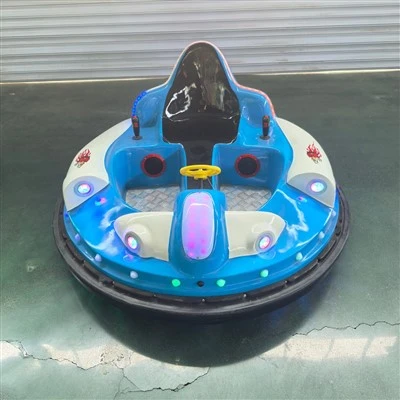
Bumper Cars REFERENCES
- American Society for Testing and Materials (ASTM). Standard Specification for Amusement Ride Vehicles (F2000).
- Occupational Safety and Health Administration (OSHA). Safety Standards for Amusement Rides.
- International Association of Amusement Parks and Attractions (IAAPA). Ride Safety Testing Guidelines.
- National Amusement Ride Safety Association (NARSA). Prototype and Compliance Testing Protocols.
- SAE International. Dynamic Testing for Mobile Ride Systems.
Shandong Feiteng Intelligent Technology Co., Ltd.
As one of the most professional amusement ride vehicle manufacturers and suppliers in China, we’re featured by quality products and good price. Please rest assured to buy discount amusement ride vehicle in stock here from our factory. If you have any enquiry about cooperation, please feel free to email us.
Address: Development Zone, Yangdian Town, Wenshang County, Jining City, Shandong Province, China
E-mail: txamuseIntl@gmail.com
WebSite: https://www.tongxingplay.com/
