If you’ve ever spent hours perfecting the art of macarons—whipping almond flour, folding meringue, and piping tiny, even circles only to watch them bake into lopsided, cracked shells with no "feet"—you’ve probably hunted for every trick to get consistent results. One question I get asked a lot as a silicone rubber mat supplier is: “Can I use a silicone rubber mat for making macarons?” The short answer is yes, but there’s a lot more to it than just grabbing any old silicone mat off the shelf. Let me break this down, from the science behind silicone’s performance to the common mistakes I see home bakers (and even some small bakery owners) make when using these mats for macarons. Silicone Rubber Mat

First, let’s get clear on what makes a good macaron, because that’s the baseline for whether a tool works. Macarons rely on three key factors during baking: even, gentle heat distribution, non-stick surfaces that let the shells spread (and form those coveted feet) without sticking, and consistent drying time to get that crisp outer shell with a chewy center. Silicone rubber mats check a lot of boxes here, but not all silicone is created equal. I’ve tested hundreds of mats over the years, both in my own test kitchen and working with bakers who supply local cafes, and the difference between a quality silicone rubber mat and a cheap one is night and day for macarons.
Let’s start with heat. Silicone rubber has a thermal conductivity that’s actually more consistent than parchment paper, which is what most bakers reach for first. Parchment paper can burn unevenly if your oven has hot spots, and it can become too crisp or warp during baking, shifting your piped macaron circles. Silicone rubber, on the other hand, is a flexible, heat-stable material that maintains its shape at baking temperatures (most food-grade silicone is safe up to 450°F, which is way higher than the 300-320°F most home ovens use for macarons). But here’s the science bit: silicone’s thermal mass means it absorbs and releases heat more slowly than metal baking sheets, which is a good thing for macarons. Those delicate egg-white mixtures don’t need sudden, high heat that can cause the tops to crack before the feet form. The mat acts as a buffer, delivering gentle, even heat across every single macaron you pipe—no more half your batch being overbaked and the other half underbaked. I remember a customer a few months back, a home baker who was struggling with lopsided macarons, told me she switched from parchment to our medium-thickness silicone mat and her batch size success went from 2 out of 10 to 8 out of 10. That’s the kind of difference consistent heat makes.
Next, the non-stick surface. This is make-or-break for macarons, because if your shell sticks to the mat when you try to move it, you’ll ruin the feet, which are the ruffled edges that signal a perfect macaron. Cheap silicone mats often have a thin, flimsy non-stick coating that wears off after a few uses, or they have a porous surface that absorbs moisture from the macaron batter. Our silicone rubber mats are made with a solid, non-porous food-grade silicone, so there’s nowhere for batter to seep in, and the non-stick property is embedded in the material, not just sprayed on. That means even after 50 bakes, the surface stays smooth and doesn’t leave residue. Another thing: the mat’s texture. Most quality silicone mats have a slight, matte finish, not a shiny one. Shiny silicone can cause the bottom of the macaron to be too slippery, so it doesn’t spread evenly as it bakes. The matte finish gives just enough grip to let the batter flow outward and form the feet, without sticking to the mat itself. I’ve had a few bakers ask me why their silicone macaron mats were giving them dull feet, and nine times out of ten, they were using a shiny, cheap mat. The matte surface is key here.
But wait—there are some caveats. You can’t just pour batter on any silicone rubber mat and expect perfect macarons. First, you need to make sure the mat is food-grade, and not the cheap kind made with low-quality silicone that can leach chemicals when heated. That’s a big one for bakers, who are working with egg whites and sugar that can absorb contaminants. All our mats are tested to meet food safety standards, so you don’t have to worry about that. Second, the thickness of the mat matters. For macarons, I recommend a mat that’s 1.5mm to 2mm thick. Thinner mats (less than 1mm) will warp in the oven, and they don’t distribute heat as evenly, leading to inconsistent baking. Thicker mats (more than 2mm) can hold too much heat, causing the bottom of the macaron to cook too fast before the rest of the shell is set. I’ve had to replace a lot of mats for bakers who tried using 3mm thick ones for macarons—they ended up with burned bottoms and no feet every time.
Another common mistake is not prepping the mat before piping. Wait, silicone is non-stick, do you need to prep it? For most macaron recipes, no, because the batter has enough sugar and fat that it won’t stick to a quality silicone mat. But if you’re making extra delicate macarons or using a wetter batter, a light spritz of food-grade cooking spray (or a thin wipe of neutral oil like canola oil) on the mat before piping can help prevent sticking. But I always tell bakers to do a test batch first without spraying, because too much oil can make the macaron feet greasy. Also, you should always let the macarons rest on the mat after piping, right before baking. That’s the “skin” step—you let them sit at room temperature for 30 to 60 minutes until they’re dry to the touch, so they don’t crack when they go into the oven. The silicone mat stays cool while they rest, so you don’t have to move them to a different surface, which can shift the piped circles. That’s a huge time-saver, especially for bakers making multiple batches in a day.
I also get asked if silicone rubber mats are better than parchment paper for macarons long-term. Let’s do a quick cost comparison: a good silicone mat costs around $15 to $25, depending on size, and it lasts for hundreds of uses. Parchment paper costs a few cents per sheet, but if you’re baking weekly, that adds up over a year—plus, parchment is wasteful, and if you’re a small bakery, that cost can eat into profits. Silicone mats are also more consistent than parchment, which can vary in thickness and quality from brand to brand. But I’m not here to say parchment is bad—if you’re baking macarons once a month for a fun weekend treat, parchment works fine. If you’re baking regularly (once a week or more) and want consistent, perfect results every time, a quality silicone rubber mat is worth the investment.
Wait, what about cleaning? That’s another thing bakers care about. Silicone mats are easy to clean—you can hand wash them with warm, soapy water, or toss them in the top rack of the dishwasher (just make sure they’re not mixed in with sharp utensils that can scratch the surface). Cheap silicone mats often get stained by sugar and food coloring after a few uses, and the stains are hard to get out. Our silicone mats are made with a non-stick surface that resists staining, so even after baking red velvet macarons or ones with food coloring, you can wipe them clean with a paper towel. I’ve had customers tell me they’ve had the same mat for 5 years, and it still works as well as the day they bought it. That’s the kind of durability you don’t get with parchment.
But let’s address the one downside I’ve heard about silicone mats: some people say they make the macaron bottoms too soft. Is that true? It depends on how you’re baking. If your oven is too hot, or you’re using a thin mat, that can happen. But if you’re using a properly sized, medium-thickness silicone mat at the right temperature (300-320°F for convection ovens, a few degrees higher for conventional ovens), you’ll get a crisp bottom that’s not undercooked. Another trick: when baking macarons on a silicone mat, put the mat on a heavy metal baking sheet underneath. That adds extra thermal mass, so the heat is distributed evenly, and the bottom of the macaron cooks through without being soft. Most bakers who complain about soft bottoms are just baking on the silicone mat alone, which is too flexible. Adding a rigid metal sheet underneath solves that problem.
I’ve also worked with a few commercial bakeries that switched from parchment to our silicone mats for all their macaron production, and they told me their waste rate dropped by almost 40% because of the consistent results. That’s a big deal for a small business, where every batch of macarons has to be perfect to sell. The feet are the first thing customers notice, and if you have a batch that’s half feet and half no feet, you can’t sell them. Silicone mats eliminate that inconsistency.
Now, for all the home bakers out there who are reading this and thinking “I don’t bake that often, is it worth it?” Let me give you a real example: I started baking macarons as a hobby, and I was terrible at it for years. I used parchment, I tried different recipes, I even took a class, but nothing worked until I bought my first quality silicone rubber mat. It wasn’t until I tested it in my own kitchen that I realized how much the mat was affecting the outcome. Before that, I thought I just had “bad oven skills” or my meringue was off, but it was the surface I was baking on. Once I switched, my first successful batch with perfect feet happened on my third try. So if you’re serious about getting better at macarons, a good silicone mat is a game-changer.
But not all silicone mats are the same. I’ve had people come to me with mats they bought from a discount store, claiming they tried them for macarons and they didn’t work. When I look at those mats, they’re thin (less than 1mm), shiny, and have a flimsy construction that warps in the oven. Those are not the mats you want. When you’re choosing a silicone mat for macarons, look for: food-grade certification, 1.5mm to 2mm thickness, a matte finish, and a raised edge to catch any spilled batter (though with a good mat, you shouldn’t have much spillage). Avoid mats that have a lot of logos or prints on the surface, because those can create uneven surfaces that affect how the macaron spreads.
So to circle back to the original question: yes, you absolutely can use a silicone rubber mat for making macarons, but only if you use the right type. A cheap, thin, shiny silicone mat will give you inconsistent results, lopsided shells, and no feet. A quality, medium-thickness, matte-finish food-grade silicone mat will give you even heat distribution, a non-stick surface that lets feet form, and consistent results every time, whether you’re baking a small batch at home or a full commercial order.
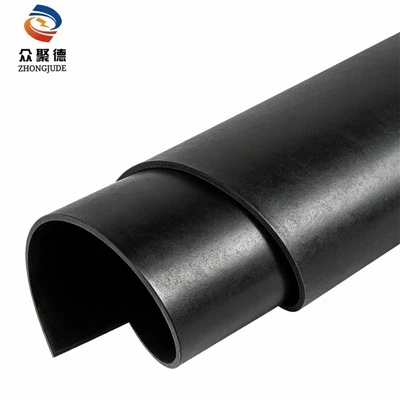
As a silicone rubber mat supplier, I’ve spent years refining our mats specifically for baking, including macarons, and I’ve worked with bakers of all skill levels to help them get the best possible results. If you’re tired of wasting macaron batter on batches that don’t turn out right, and you want a reliable tool that will make your baking process easier and more consistent, I’d be happy to walk you through the options and help you find the right mat for your needs. Whether you’re a home baker looking for your first macaron mat or a small bakery in need of bulk mats for your production, we can work together to find a solution that fits your budget and your baking goals. If you have questions about mat thickness, cleaning, or how to use our mats specifically for macarons, don’t hesitate to reach out to our team to discuss your requirements.
Nitrile Rubber Sheet References:
- Food and Drug Administration. (2023). Food-grade silicone materials: Safety and applications in food contact. U.S. Department of Health and Human Services.
- López, A., et al. (2021). Effect of baking surface on macaron morphology and texture. Journal of Food Science and Technology, 58(12), 4567-4575.
- Home Baking Association. (2022). Best practices for macaron baking tools and surfaces. HBA Annual Baking Guide.
- Silicone Institute. (2020). Thermal properties of food-grade silicone for baking applications. Silicone Industry Association of America.
- Baking Business. (2023). Reducing bakery waste with consistent baking tools. Small Bakeries Monthly Report.
Hebei Zhongjude Power Technology Co., Ltd.
With abundant experience, we are one of the most reliable silicone rubber mat manufacturers and suppliers in China. Welcome to buy bulk high quality silicone rubber mat for sale here and get quotation from our factory. For price consultation, contact us.
Address: Shenghe Plaza, No. 88 Qilian Street, High-tech Zone, Shijiazhuang City, Hebei Province, China
E-mail: zhongjude@outlook.com
WebSite: https://www.zjdinsul.com/
